
Prosperity
Prosperity
The UPV promotes sustainable prosperity. Among other initiatives, it generates clean energy on its campuses, such as the new solar installation at the Gandia campus; it transfers the knowledge and technology it generates to companies and organizations through UPV Innovación; and it envisions what a carbon-neutral university will look like through UPV Living Lab. Here you’ll find, SDG by SDG, its educational programs, research, endowed chairs, services, and reports.
Page contents
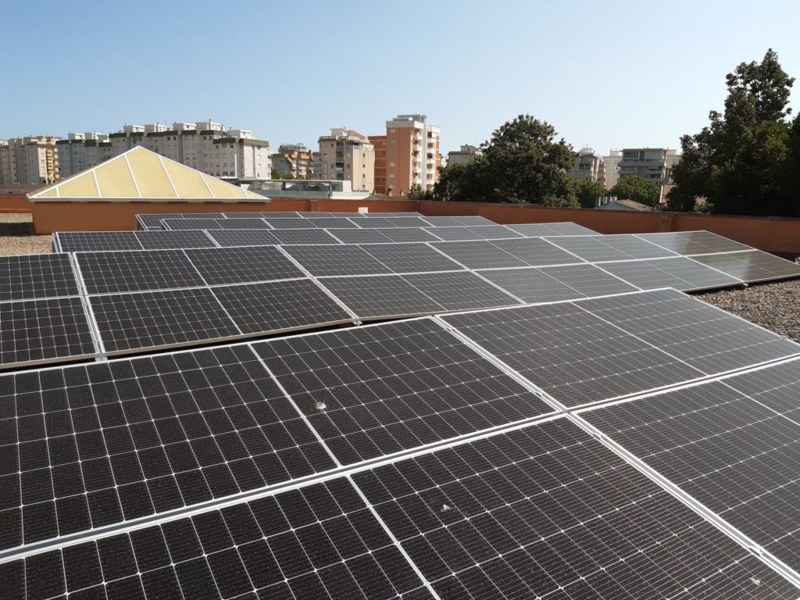
Solar Energy Production on the Gandía Campus
New solar power installation on the Gandía campus of the Polytechnic University of Valencia. A photovoltaic system on the roof of Building G1A at the Gandía Higher Polytechnic School consists of 90 panels with a unit power of 545 Wp and an inverter with a rated power of 50 kW, achieving a peak power of 49.1 kWp. The new facility is expected to generate approximately 74,200 kWh annually.

UPV Innovation
The UPV contributes to innovation in businesses and other organizations in our society. To this end, the institution educates students with an innovative and entrepreneurial spirit at its academic centers and generates knowledge and technology that it transfers to society and the socioeconomic environment through its research units.
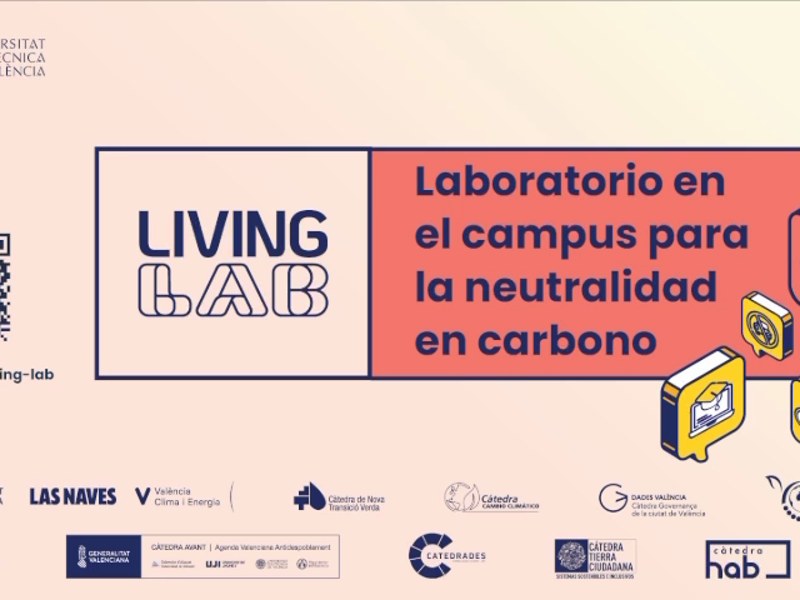
Living Lab
UPV Living Lab – Decarbonization Scenarios, a forward-looking workshop that transports participants to a hypothetical climate-neutral scenario set in 2040, to reflect on an initial narrative based on four different decarbonization models. Building on these scenarios, participants are invited to envision different models for the university.
SDG 7. Affordable and Clean Energy
Governments around the world are placing the issue of the necessary and urgent energy transition toward a new energy model based on efficiency and zero pollution at the center of their policies. Universities must properly manage the energy they need and consume, promoting self-sufficiency and the use of “green energy.” This SDG is closely linked to most environmental SDGs, particularly SDGs 11, 12, and 13. Furthermore, ensuring access to energy contributes to the eradication of poverty (SDG 1) and inequality (SDG 10), and requires new, more democratic and participatory management models (SDG 16).
Education, Research, UPV Chairs, University Services, and Reports
Training
Research
UPV Chairs
University Services
Reports
SDG 8. Decent Work and Economic Growth
The university contributes to the creation of decent jobs and to inclusive economic growth through education, research, and knowledge transfer. It also directly employs thousands of people, to whom it must guarantee decent working conditions.
Education, Research, UPV Chairs, UPV Services, and Reports
Training
Research
UPV Chairs
UPV Services
Reports
SDG 9. Industry, Innovation, and Infrastructure
Investments in infrastructure are essential for social and economic development. Transportation, energy, telecommunications, industry, health care, education, and other sectors require appropriate, sustainable, and resilient infrastructure that is capable of meeting needs and adapted to physical and human contexts.
The university promotes regional, national, or international innovation systems aimed at providing solutions to the most pressing social problems, with a significant impact on people’s quality of life.
Universities also play a key role in the generation, dissemination, and application of knowledge, which influences the production and transfer of knowledge for development. Furthermore, they are a fundamental driving force for industry and the productive sector.
Education, Research, UPV Chairs, Services, and Reports
Training
Research
UPV Chairs
Services
Reports
SDG 10. Reducing Inequalities
In the university context, as noted in SDG 1, ensuring equitable access to higher education for all people is a powerful tool in the fight against poverty and inequality. We focus on the university’s efforts to promote access to higher education for particularly disadvantaged groups, such as people with disabilities, ethnic or cultural minorities, older adults, etc. We exclude data related to people with low economic resources, as well as gender inequality, as these are already addressed in SDGs 1 and 5, respectively.
Education, Research, UPV Chairs, Services, and Reports
Training
Research
UPV Chairs
Services
Reports
SDG 11. Sustainable Cities and Communities
Making our cities and communities inclusive, safe, sustainable, and resilient has economic, cultural, environmental, and other implications that relate to public investment in basic services and infrastructure, but also to democracy, participation, and civic awareness. Universities are like small cities made up of a community of people living together who require political, social, and economic governance to ensure the provision of services and their proper functioning. In this case, the emphasis has been placed on evaluating universities’ efforts to promote and preserve cultural and natural heritage, both on and off campus, including issues related to sustainable mobility, the promotion of cultural initiatives, art, heritage, and so on.