

What can we do with waste so that it stops being a problem and becomes part of a more sustainable solution? This was one of the questions addressed during the ENHANCE Summer School Reimagining Waste: Ethical and Sustainable Solutions in Waste Management, held in Warsaw in July.
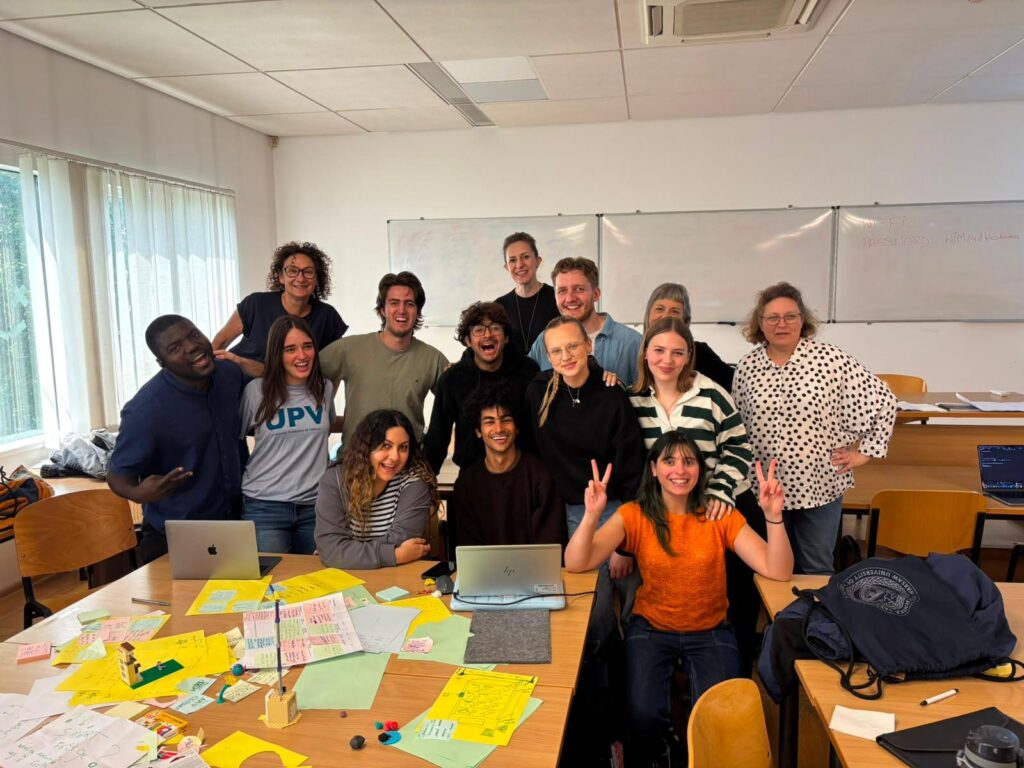
The event, organized by the Warsaw University of Technology in collaboration with Chalmers University of Technology and the Polytechnic University of Valencia, brought together 21 students from 7 universities in the ENHANCE Alliance to work on one of today’s major environmental challenges: waste management.
Representing the UPV were Christian, Laura, and Yohana, who had the opportunity to be part of international teams and work alongside students from other European universities. The group of professors also included a representative from the UPV: Professor Ester from the Department of Construction Engineering and Civil Engineering Projects.
From Understanding the Problem to Finding Solutions
The program began with a online block, which took place from June 8 to July 3, during which the students built a common foundation of knowledge about sustainable waste management. During these first few weeks, they addressed issues such as the waste hierarchy, the circular business models, the ecodesign and the life cycle analysis of the products. They also reflected on the ethical aspects of the responsible use of resources.
But the training wasn’t just theoretical. Through interactive workshops, case studies, and teamwork activities, the participants got to know one another and formed the teams with which they would carry out their projects.
A week to work on a real-world challenge
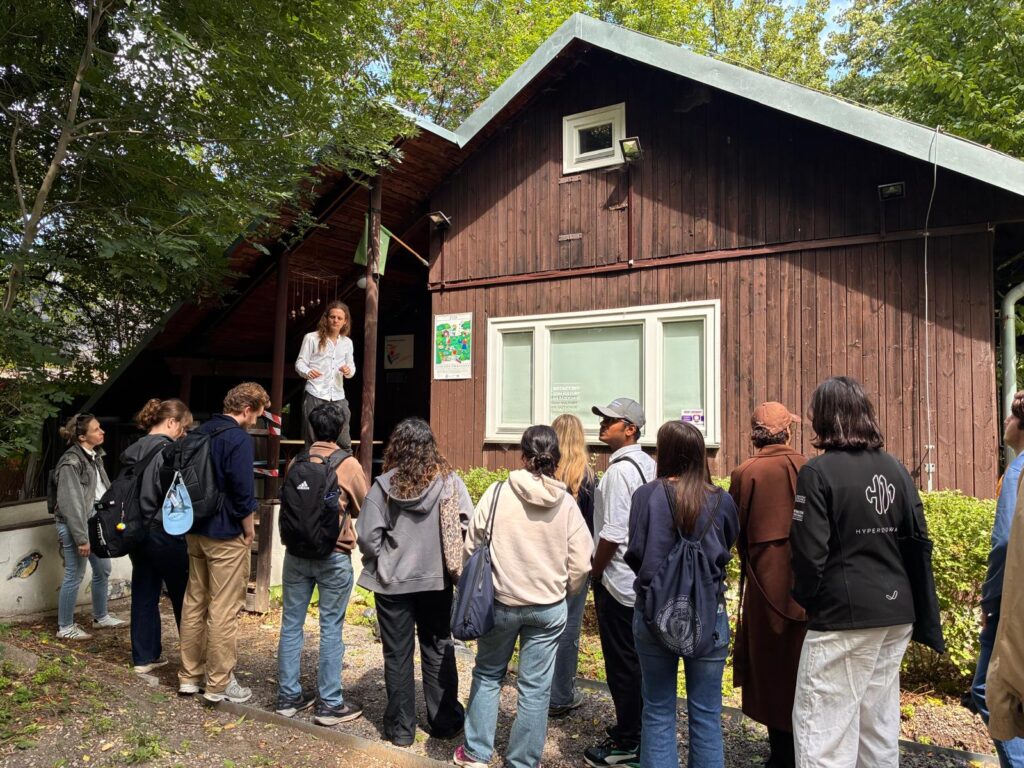
On July 6, the in-person portion at the School of Materials Science and Engineering at the Warsaw University of Technology. For five days, the students worked intensively in teams to turn their knowledge and ideas into concrete proposals. Workshops, mentoring sessions, hands-on activities, and teamwork allowed them to analyze various challenges related to waste and propose possible solutions.
To do so, they had to take into account not only the feasibility of their proposals, but also the needs of the various stakeholders, the ethical implications of their decisions, and the principles of sustainable design and the circular economy.
The in-person week concluded with a presentation of the concepts developed by the teams, during which the students were able to share their proposals and put into practice the skills they had acquired during the program.
The experience continues after Warsaw
The work didn’t end when they returned home. Between July 20 and 31, the participants resumed the program online to continue developing and refining their projects with the support of academic mentors.
To wrap up the Summer School, each team presented the final results of their work, accompanied by a short video explaining their proposal. In this way, the experience allowed the students to go through the entire process: understand a challenge, work with people from different countries and with different backgrounds, develop an idea, receive guidance, and turn it into a concrete proposal.
Original text from WUT, adapted for the ENHANCE UPV microsite