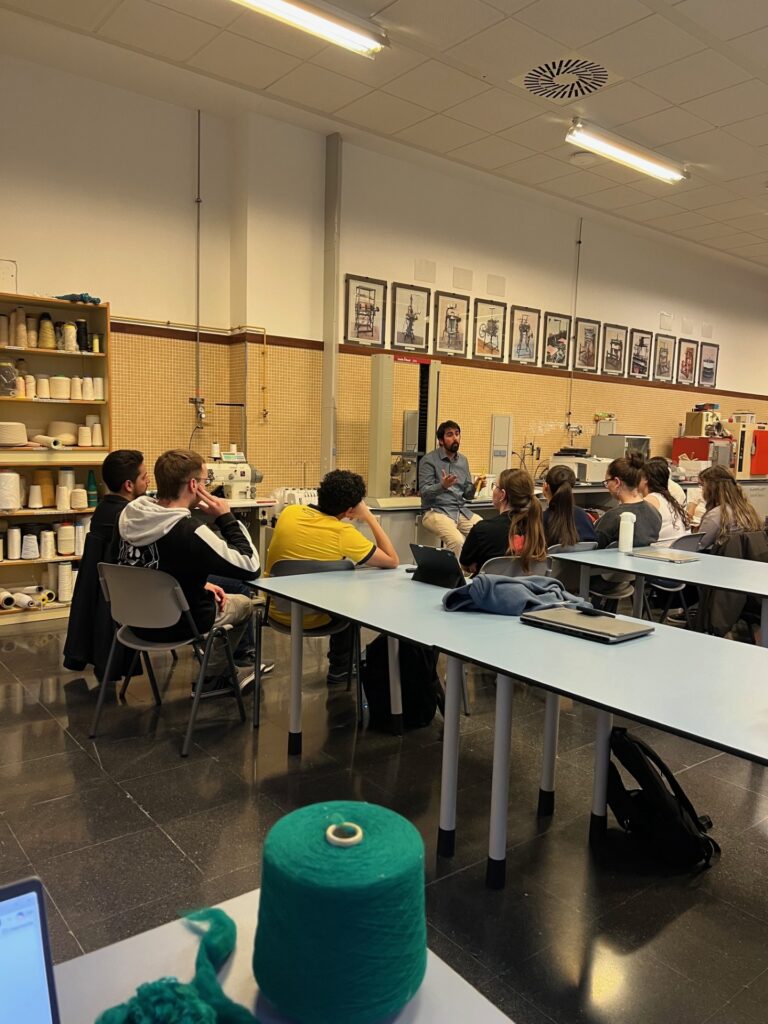
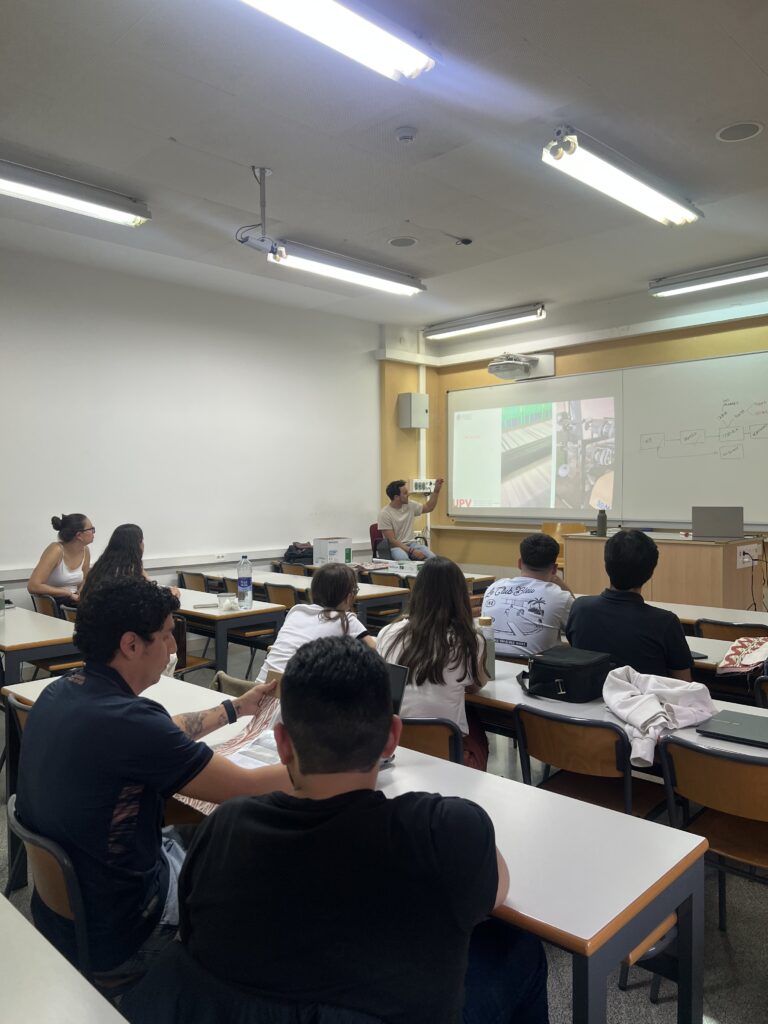
The course “Textile Fibers and Structures” in the Master’s Degree Program in Engineering, Materials Processing and Characterization, taught by Professor Ana Rodes, has concluded after a semester in which students were able to gain firsthand insight into the realities of the textile industry through the participation of industry professionals and the professional experience of the faculty members themselves.
Throughout the semester, a series of sessions were held in the form of brief classroom interviews, during which industry professionals shared their experiences in various stages of the textile value chain, allowing students to contextualize the course’s theoretical content and raise practical questions.
Specifically, the following people participated:
- Pablo Sanz, Sales Manager at Benisaidó Yarns, a spinning company with extensive international experience, where various types of spinning processes were presented along with how they are adapted to market needs.
- David Martínez, Product Manager at Joyper Textiles, a company specializing in textiles with an international presence, which explained strategies for designing and adapting production to meet customer demands, providing practical examples in the classroom.
- Lucía Verdú, Director of Quality and Sustainability at Aquaclean Group, an industrial group operating in various stages of the textile supply chain, which discussed dyeing and finishing processes, as well as how its patented Aquaclean finish works.
- Cristina Molina, a researcher at AITEX, who provided a technical overview of the work carried out at the technology center and its role in supporting the textile industry.
In addition, the professor Ana Rodes He shared his professional experience at the company with the students Recover, helping to convey a practical perspective on the sector and strengthening the link between academic education and the realities of the industry.
These sessions have enabled students to gain a comprehensive understanding of the various stages of the textile industry’s value chain—from spinning to finishing processes and innovation in sustainability—by fostering direct interaction with professionals and the analysis of real-world case studies.
This teaching format has facilitated the exchange of ideas, the raising of questions, and exposure to industrial practice, thereby strengthening the link between the university and industry in the field of materials engineering.