


The project “Ecology and Impact of the Atlantic Blue Crab in Coastal Lagoons, Estuaries, and Adjacent Waters of the Spanish Mediterranean” (ECESIS), carried out by researchers from the Polytechnic University of Valencia (UPV) at the Gandia campus and the IRTA (Institute for Agri-Food Research and Technology) in coordination with the Spanish Institute of Oceanography (IEO) and the University of Alicante, aims to analyze, on a large scale, the biological and ecological processes that determine the dispersal of an invasive species such as the blue crab.
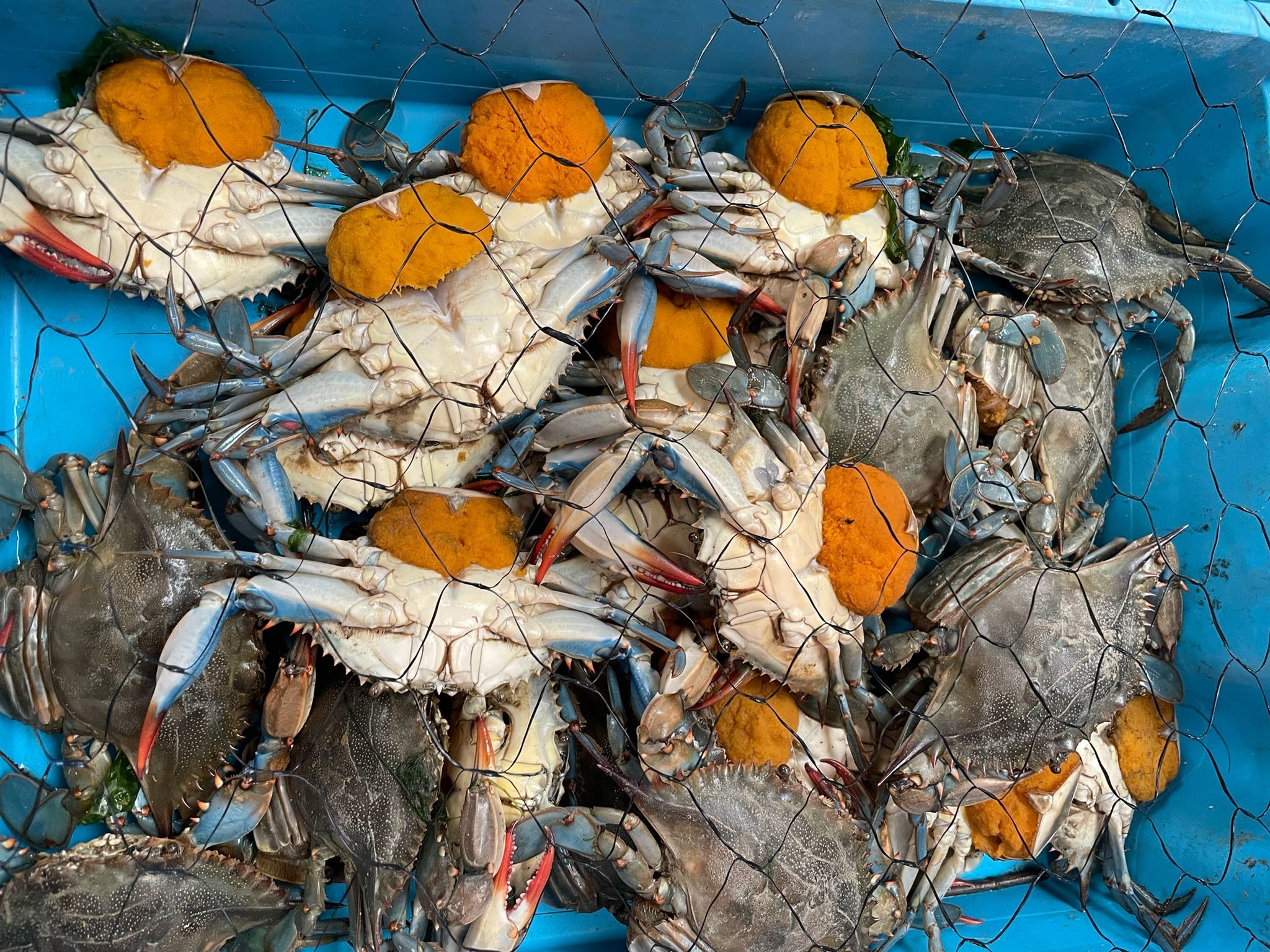
The first record of the blue crab (Callinectes sapidus) along the Spanish Mediterranean coast was in the Ebro Delta in 2012. Since then, its spread along the Spanish coastline has been rapid. It is an opportunistic omnivore and therefore has the potential to have a significant impact across multiple trophic levels in non-native habitats.
The trophic ecology of this species has been virtually unexplored in invaded Spanish ecosystems, so one of the main objectives of the project will be to identify the species that make up the blue crab’s diet in four different regions of the Spanish Mediterranean: the Ebro Delta, the Albufera de Valencia, the Santa Pola and El Hondo lagoons, and the Mar Menor. This will allow us to compare how different blue crab populations respond to various abiotic environmental factors and human pressures and to determine which conditions are most favorable for the species.
The blue crab can also have an impact on human activities. Local fishermen report significant negative effects on fishing activities, such as injury to fish caught in traps and nets, and damage to gillnets or other fishing gear. Furthermore, the blue crab’s impact on natural beds and local bivalve farms can be considerable. However, in its native habitats, this crab is itself a prized seafood. The dual nature of the blue crab in non-native habitats—as both an invasive species and a fishery resource—must be taken into account when identifying management strategies. The idea is that overfishing of the invasive blue crab will lead to a significant decline in its abundance, thereby reducing both ecological and economic impacts.
This project is funded under the Spanish Ministry of Science and Innovation’s national programs for knowledge generation and the scientific and technological strengthening of the R&D&I system, as well as for R&D&I focused on societal challenges.