


The CaboRorcual project, developed by researchers at the UPV’s Gandia Campus, will analyze the presence, origin, and threats to the fin whale at Cabo de la Nao and the Ibiza Channel. Follow the project’s day-to-day progress on Instagram.
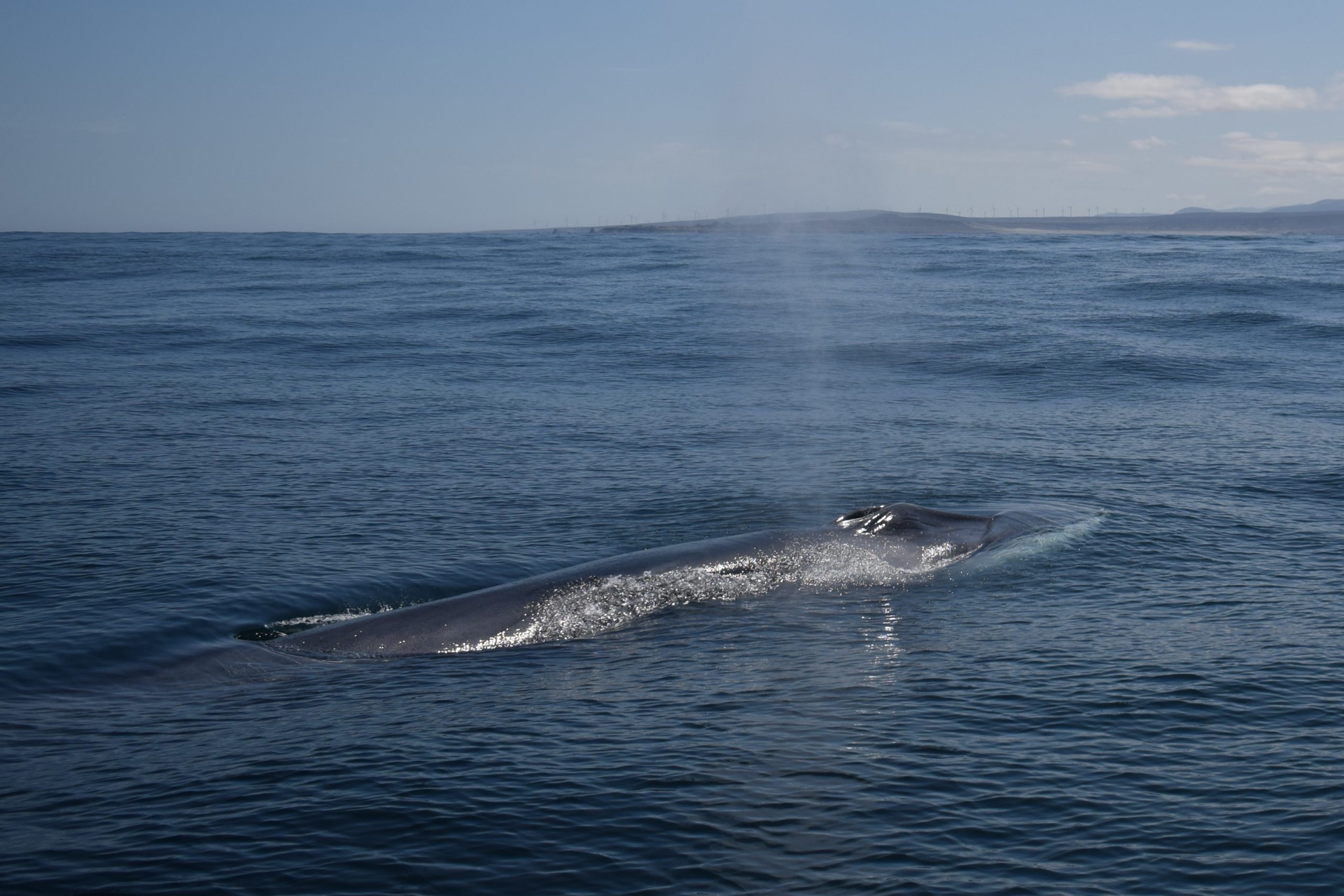
The fin whale (Balaenoptera physalus), the second-largest animal on the planet after the blue whale, can be spotted in the summer in the waters of the Mediterranean Sea, off the coasts of Denia and Xábia between Cape Nao and the Ibiza Channel. To study its behavior, researchers specializing in ecology, coastal oceanography, and acoustics from the UPV’s Gandia Campus and the IGIC and iTEAM institutes have joined forces to analyze its presence and movements in the area. Students in the UPV’s MEMIC master’s program will also participate in various phases throughout the project.
Using passive acoustic techniques, satellite tracking, visual surveys, and photoidentification, this study aims to analyze the presence and origin of fin whale populations; their habitat use; the risks associated with human activities (such as maritime traffic and underwater noise); and to assess the suitability of the area for the proposed new marine protected area.
Throughout the program, sampling campaigns will be conducted using visual detection transects and photo identification to verify the presence of fin whales, bottlenose dolphins, and other marine mammals. Finally, the suitability of the area will be assessed to determine whether to propose it as a new marine protected area or to modify the boundaries of the cetacean migration corridor in the Mediterranean.
To achieve the specific objectives set forth, passive acoustic monitoring campaigns will be conducted using multiple acoustic detectors deployed at anchor. A pilot project will also be carried out to tag the animals with satellite transmitters, which will allow their movements to be tracked. In addition, the risks posed by existing maritime traffic along their migration routes will be analyzed.
[
The project is supported by the Valencian Regional Government, the city councils of Dénia and Xàbia, the Baleària Foundation, the Eucrante Association, the Spanish Institute of Oceanography, and the Oceanogràfic Foundation—which will be responsible for collecting biological samples and tagging the animals with satellite trackers—as well as the Biodiversity Foundation of the Ministry for Ecological Transition and Democratic Challenge.