

The event brought together 83 representatives from institutional management teams, staff involved in quality assurance systems, and academic program directors to advance a more integrated, practical, and continuous improvement-oriented quality model.
On June 11, the Polytechnic University of Valencia held a workshop on institutional accreditation of academic institutions, attended by 83 participants, including members of institutional management teams, administrative staff involved in the UPV’s quality systems, and academic directors of degree programs.
The session, titled “UPV Institutional Accreditation. Building a Certified, Useful, and Sustainable Quality System for Our Campuses,” was opened by José Pedro García-Sabater, Vice Rector for Planning, Academic Affairs, Quality, and Accreditation, and featured the participation and support of UPV Rector José Capilla.
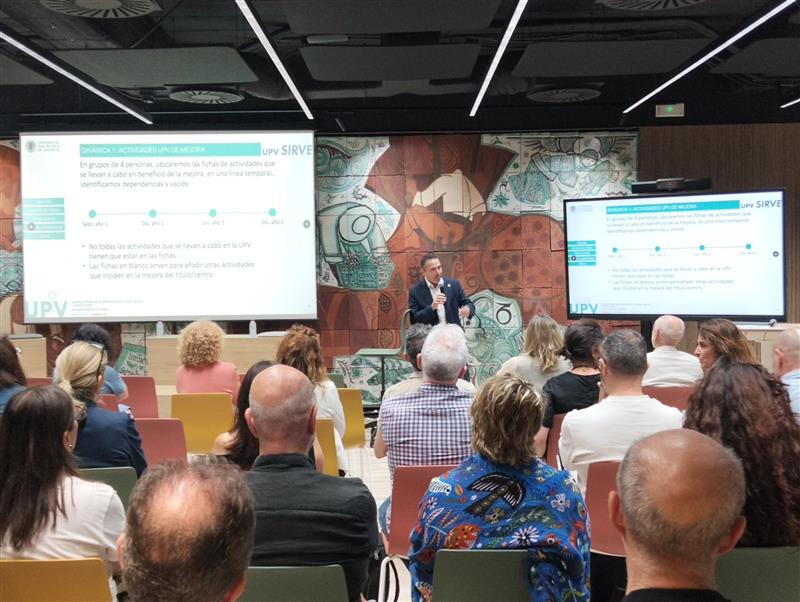
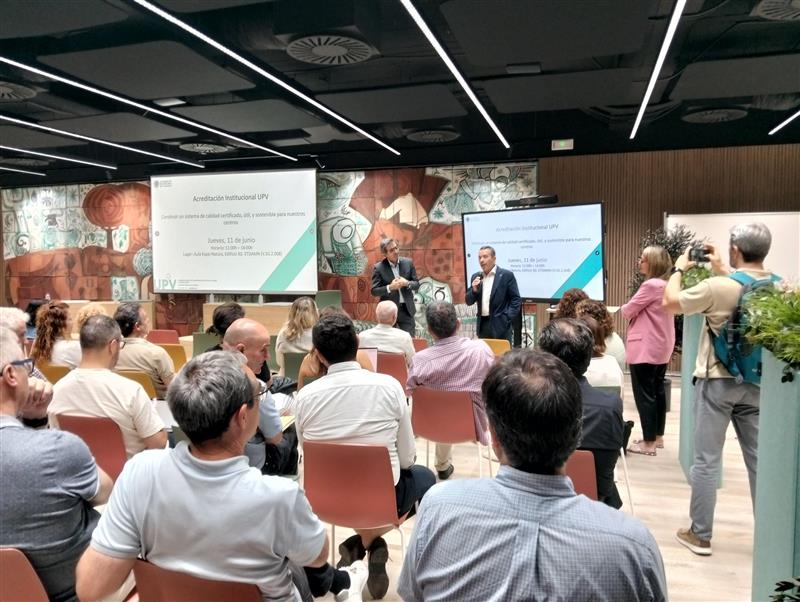
The session, titled “UPV Institutional Accreditation. Building a Certified, Useful, and Sustainable Quality System for Our Campuses,” was opened by José Pedro García-Sabater, Vice Rector for Planning, Academic Affairs, Quality, and Accreditation, and featured the participation and support of the UPV Rector, José Capilla.
During his remarks, the university president emphasized the importance of moving toward modern quality systems focused on continuous improvement and capable of helping the university adapt to the sociological, demographic, and technological changes it will face in the coming years. In this vein, he emphasized the need to move beyond viewing quality systems as a bureaucratic burden and instead understand them as a tool that enables the university to become a learning organization.
The purpose of the event was to raise awareness among administrative teams and academic leaders about the importance of working in a coordinated manner toward the certification of the Internal Quality Assurance System at the institutions, as well as to create a shared space for reflection on the organizational, academic, and technical implications of this process.
The roundtable discussion, moderated by Daniel Catalá (Professor of Business Organization at the UPV), provided an opportunity to hear the perspectives of individuals with experience in evaluation, institutional accreditation, and university management, such as Iván Barreda —Vice Rector for Quality at the UJI—, Javier Oliver —General Director of AVAP—, and Roberto López —Quality Specialist at the UM—. During the discussion, topics such as the shift from program-by-program accreditation toward an institution-centered model, the need to define clear and measurable quality objectives, the importance of linking indicators, evidence, and improvement actions, and the role of different stakeholders in reviewing the academic offerings and the operation of degree programs.



Throughout the session, it became clear that institutional accreditation should not be viewed solely as a regulatory requirement or an external evaluation process, but rather as an opportunity to better organize processes, connect existing initiatives within the university, and strengthen the centers’ capacity to make evidence-based decisions.
One of the key messages was the need to shift from an approach focused on preparing documentation for evaluation visits to one centered on day-to-day quality management. In this regard, it was emphasized that a certified quality system must be in place, used on a regular basis, and contribute effectively to improving teaching, learning, and the student experience.
It was also emphasized that the school is the key unit in the institutional accreditation process. Although UPV has common procedures and a centralized support structure, each school must be able to demonstrate its own priorities, objectives, monitoring mechanisms, and improvement actions. The challenge, therefore, lies in combining a common university-wide framework with the necessary adaptation to the specific circumstances of each school or college.
In this regard, the workshop made it clear that the UPV already has a solid foundation on which to build: experience gained in the processes of verification, monitoring, modification, and accreditation of degree programs; specialized technical teams; committed academic leaders; and numerous improvement initiatives driven by the schools, degree programs, and faculty. The institutional accreditation process offers the opportunity to better identify, organize, and connect all these elements into a more coherent, functional, and sustainable system.
The session also included a participatory exercise aimed at identifying the main barriers and facilitators to the implementation of the process. Among the barriers identified were work overload, a lack of time for reflection, difficulty in engaging faculty, a limited perception of the value of certain quality assurance tools, the need to strengthen coordination among institutions, departments, and degree programs, and difficulties in effectively monitoring improvement efforts.
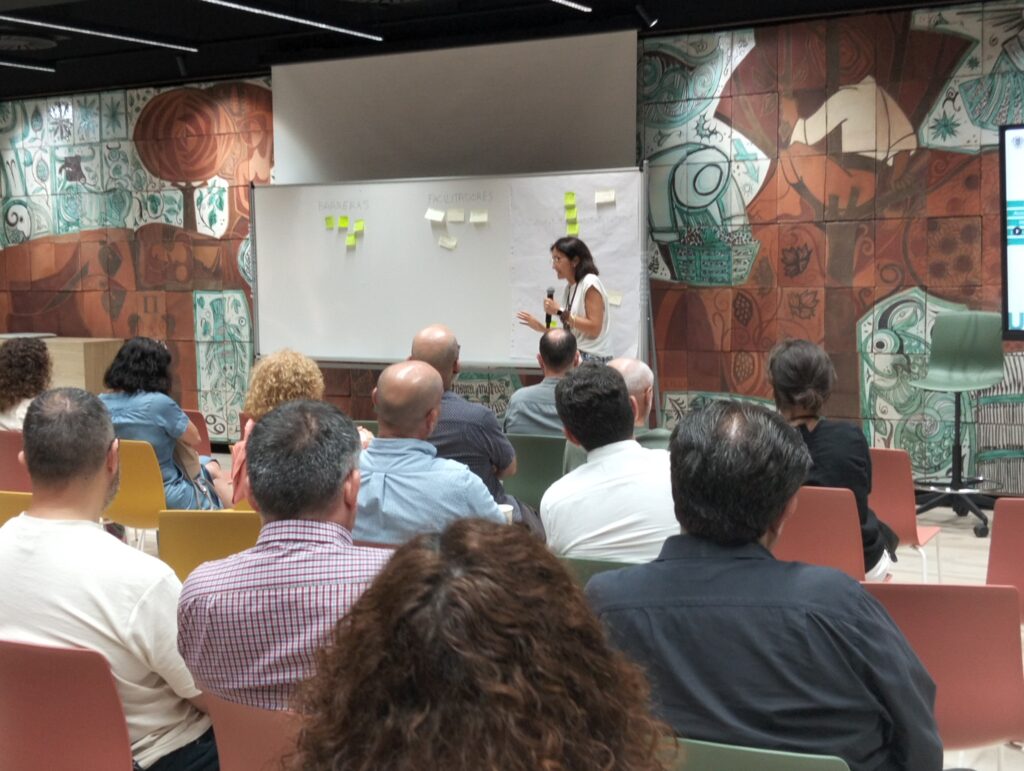
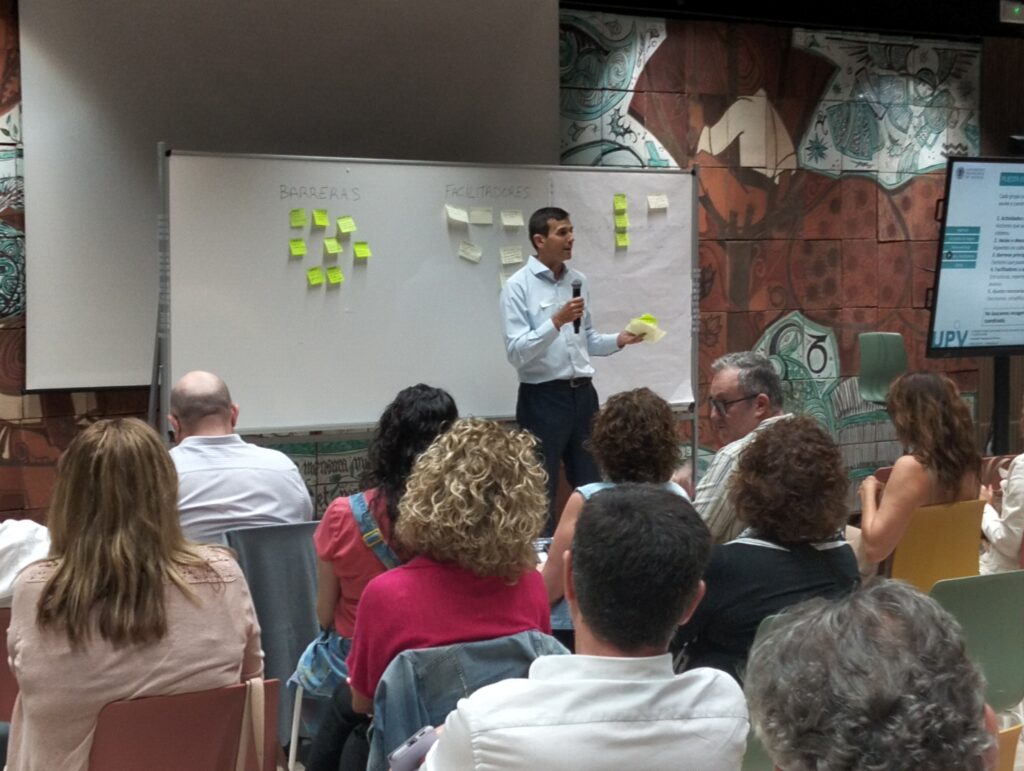

Participants also highlighted the need for tools that enable institutions to take action when issues are detected, as well as strengthening training, support, and recognition for those who take on responsibilities related to quality. It was emphasized during the conference that quality will only be perceived as useful if it helps in making decisions, solving problems, and tangibly improving educational activities.
Among the identified facilitators, the importance of having a common reference model for all centers raised —one that facilitates work, prevents duplication, and reduces the administrative burden- while allowing customization of aspects related to each center’s identity, strategy, and characteristics. Other key elements identified included specialized technical support, strengthening human resources, providing guidance to quality managers, and the opportunity to make better use of existing best practices at the university.
The event concluded with a shared vision: institutional accreditation should be a process that benefits both individual institutions and the university as a whole. It is not merely a matter of certifying a system, but rather of building a more integrated approach to quality management, strengthening accountability, linking available information, and guiding decisions toward continuous improvement.
With this event, the UPV is taking another step forward in preparing for the institutional accreditation process of its centers, aligning technical, academic, and administrative efforts around a common goal: moving toward a certified quality system that is integrated into the day-to-day operations of the centers, sustainable in its functioning, and geared toward improving the education the university provides to society.