

The event, held at the Gandia Campus, brought together faculty members, academic leaders, and external professionals to identify challenges and initiatives that will help build a teaching-and-learning model that is more active, student-centered, practical, and closely aligned with the professional world.
On June 10, the Polytechnic University of Valencia held a new working session at the Gandia Campus as part of its strategic reflection process aimed at rethinking its teaching-learning model. The event brought together 40 representatives from various groups: faculty, academic leaders, and representatives from several professional fields, with the aim of identifying challenges, comparing external perspectives, and advancing potential initiatives that contribute to strengthening the student learning experience in order to develop a robust teaching-learning model unique to the UPV.
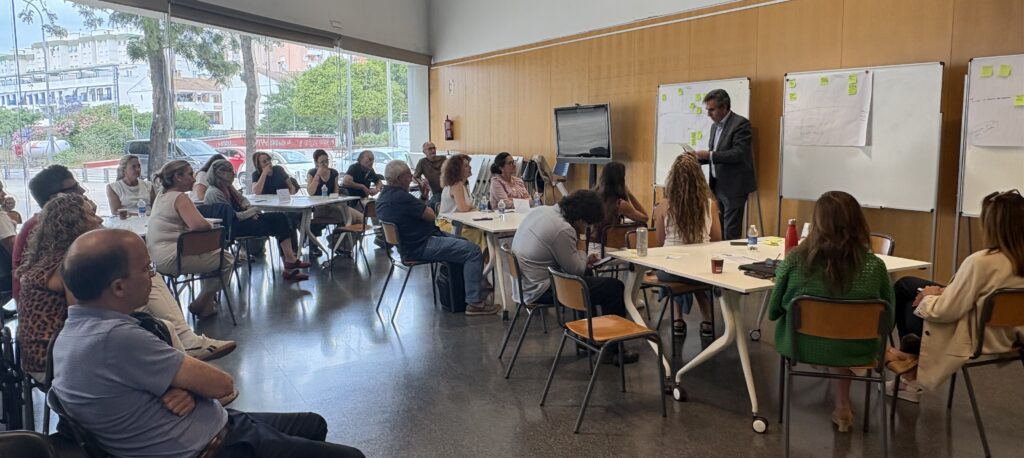
The session was opened by José Pedro García-Sabater, Vice Rector for Planning, Academic Affairs and Quality, who framed the event within the work promoted by the Vice-Rector’s Office to collaboratively build a teaching-learning model adapted to the profound technological, social, and professional changes that are transforming higher education.

During the first part of the day, participants worked on identifying strategic challenges related to university teaching, student motivation, in-person instruction, assessment, the role of artificial intelligence, connections to the professional world, and the need to reinforce the unique value of the university experience.
This was followed by a panel discussion featuring three alumni and professionals associated with the Gandia Campus: Nacho Ruiperez, screenwriter, director, and instructor in the audiovisual field; Eva González, founder of Emocions Viatges, company specializing in customized travel experiences; and Iñaki Miralles, telecommunications engineer and founding partner of companies specializing in acoustic consulting and solutions for noise and vibration.
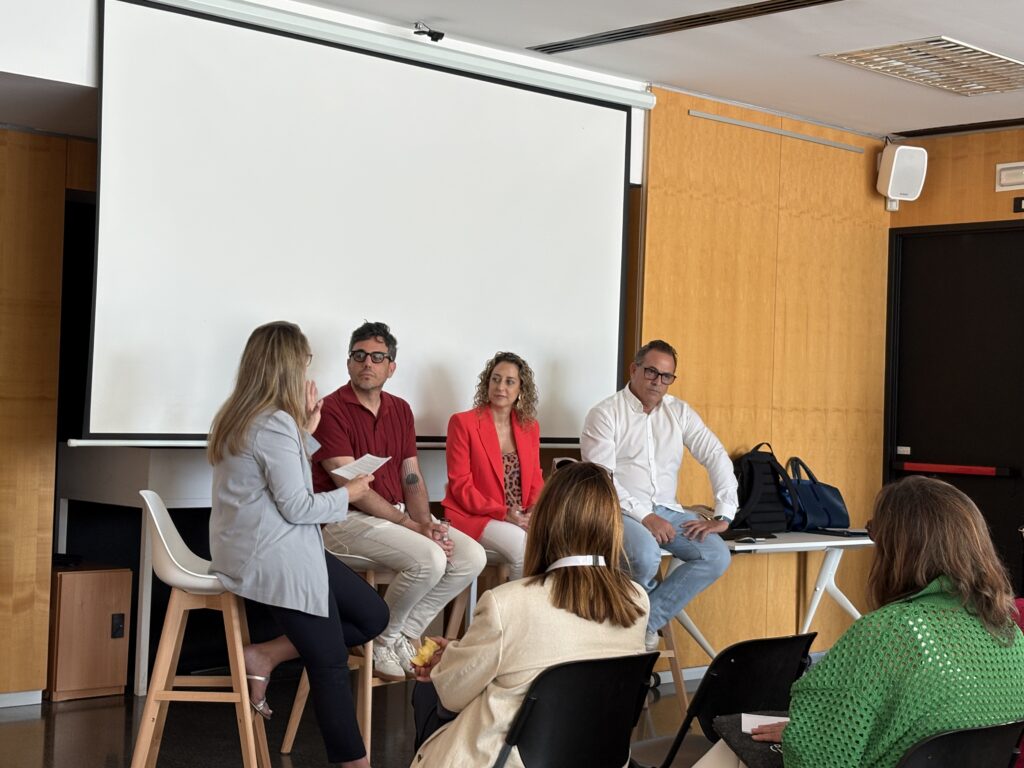
The roundtable discussion was moderated by Rosario Perelló, Director of Strategic Planning, who posed questions to the panelists to explore—based on their respective professional experiences—how the ways of creating value, working, engaging with customers, and dealing with uncertainty are changing across a wide range of industries.
Drawing on their expertise in the audiovisual, tourism, and engineering fields, the three speakers agreed on a central idea: in a context where information, digital tools, and artificial intelligence are increasingly accessible, professional value no longer lies solely in possessing technical knowledge, but in knowing how to interpret it, apply it, and turn it into useful solutions for people and organizations.
In the audiovisual field, it was noted that artificial intelligence is profoundly transforming the ways in which content is created and produced, as well as how creators engage with their audiences. However, it was also emphasized that sensitivity, a unique perspective, shared experience, and the ability to make sense of things remain profoundly human qualities.
Representatives from the tourism sector emphasized that the widespread availability of information does not eliminate the need for expert guidance. On the contrary, it underscores the importance of active listening, personalization, empathy, and the ability to handle real-world situations when problems or uncertainty arise.
In the field of engineering and technical services, it was emphasized that technical knowledge remains essential, but it is no longer sufficient as the sole differentiating factor. Professionals must be able to interpret ill-defined problems, communicate with clients, work with multidisciplinary teams, advocate for proposals, manage uncertainty, and provide solutions in changing contexts.
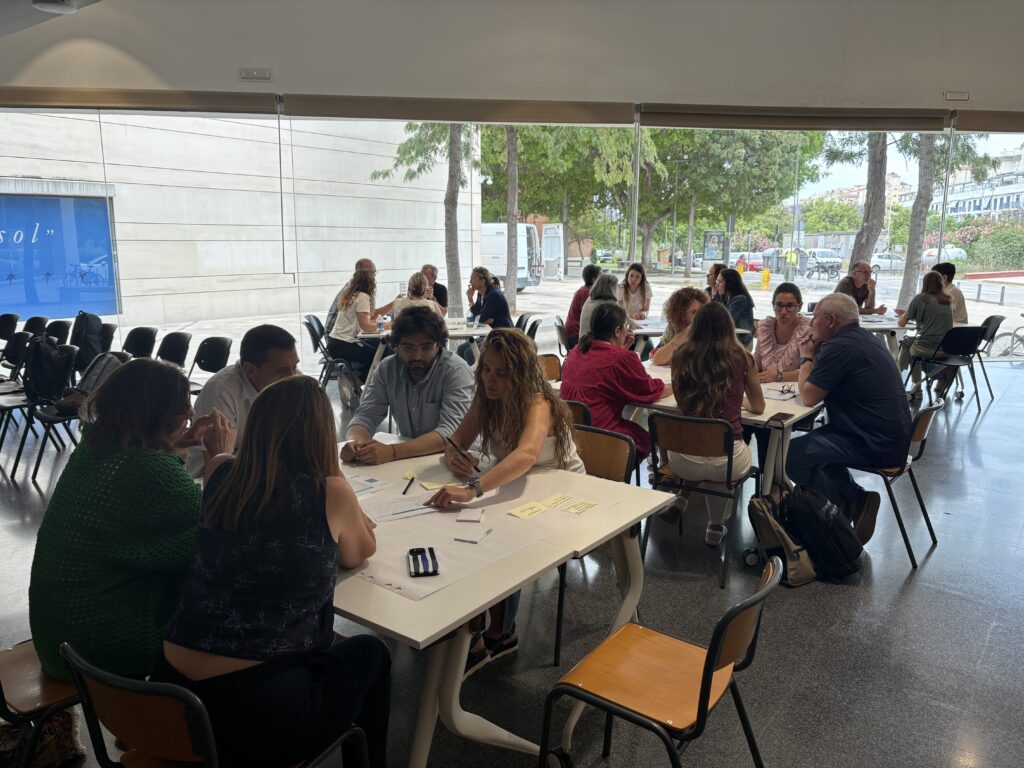
These contributions served as the basis for a second phase of work focused on applying the ideas from the roundtable discussion to the university setting. Participants agreed on the need to move away from models focused on content delivery and the completion of closed-ended exercises toward learning experiences that are more active, applied, reflective, and connected to real-world problems.
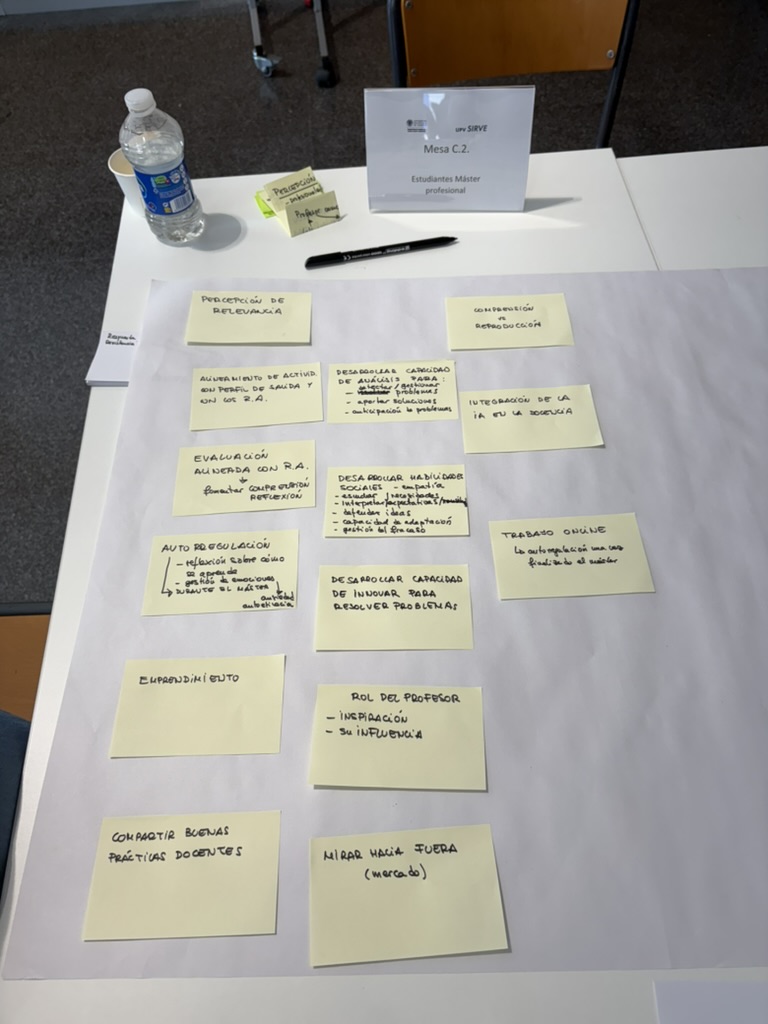
Promotion of project-based learning, the incorporation of interdisciplinary projects, collaboration with local businesses and organizations, the adaptation of teaching spaces to encourage teamwork, the review of assessment systems, and the creation of more opportunities for feedback, support, and shared reflection, were notable initiatives proposed.
The discussion also addressed the importance of strengthening the role of faculty as facilitators of learning. In a world where artificial intelligence can provide quick answers, traditional universities have the opportunity to offer what technology cannot replace: judgment, foundational knowledge, critical thinking, conversation, human experience, a culture of hard work, and the ability to learn from mistakes.
The workshop identified several areas for improvement regarding the UPV’s future teaching and learning model: strengthening technical and scientific foundations, integrating cross-disciplinary skills more effectively, preparing students for open-ended and uncertain problems, promoting learning-oriented assessment, and creating a university experience with a greater sense of community, belonging, and connection to the professional world.
The event was closed by José Pedro García-Sabater, who highlighted the main conclusions of the day and emphasized the need to continue creating opportunities for shared reflection among faculty, students, alumni, employers, and academic teams. In his closing remarks, he emphasized the importance of moving toward a unique, realistic, and recognizable model capable of combining the strength of technical training with the human, critical, and adaptive skills that future graduates will need.
With this event, the UPV continues to make progress in a collaborative process aimed at defining a teaching-learning model aligned with its identity as a public, polytechnic, on-campus university committed to training professionals capable of adding value in an increasingly uncertain and changing environment.