
The Universitat Politècnica de València (UPV) has participated in the XXXVIII CRUE Sustainability Conference held on May 29, 2026 at the European University of Madrid, a key meeting for the promotion of environmental policies in the Spanish university system. Within the framework of this meeting, two strategic reports drawn up by the University Sustainability Assessment Group (GESU), coordinated by the UPV.
During the conference,UPV has played a coordinating role in the GESU group, as well as actively participating in other working groups of the sectorial commission: “Sustainability in university teaching”, “Biodiversity and climate” and “University and sustainable mobility”. This involvement reinforces the UPV’s institutional commitment to the development of shared tools and the coordinated progress of the university system in terms of sustainability.
New guidance for Scope 3 carbon footprint calculation
Among the main results of the day, it is worth highlighting the approval of the Guidance for calculating Scope 3 of the carbon footprint in universities developed by GESU.
The document addresses one of the main challenges in university environmental measurement: the quantification of indirect emissions. To this end, it establishes a common methodology that facilitates its calculation and comparability between universities, reinforcing transparency in environmental management.
The guide includes areas such as the mobility of the university community, waste management, water consumption or the purchase of goods and services, proposing a procedure based on the definition of organizational boundaries, data collection and the application of reference emission factors. It also incorporates practical recommendations to improve the quality of the inventories and move towards more complete and rigorous systems.
Diagnosis 2025 of sustainability in universities
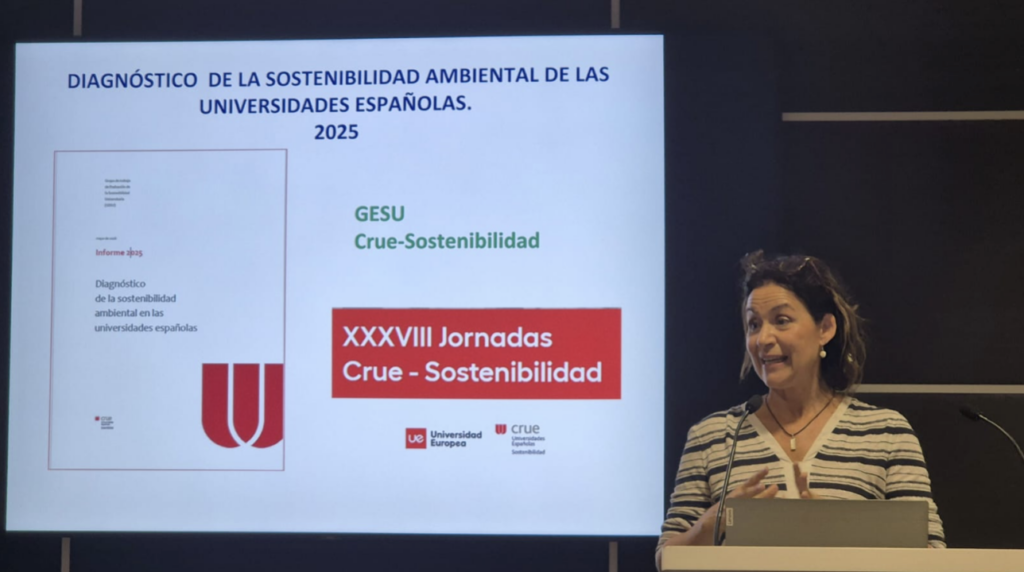
The plenary also approved the Diagnosis of environmental sustainability in Spanish universities 2025, which analyzes the environmental performance of 44 universities using 123 indicators organized into three areas: organization, teaching and research, and environmental management.
The results reflect a positive evolution, with an overall average score of 67% and improvements in areas such as urban planning and biodiversity, research, energy and mobility. However, the report identifies areas with more room for improvement, such as waste, green procurement and environmental impact assessment.
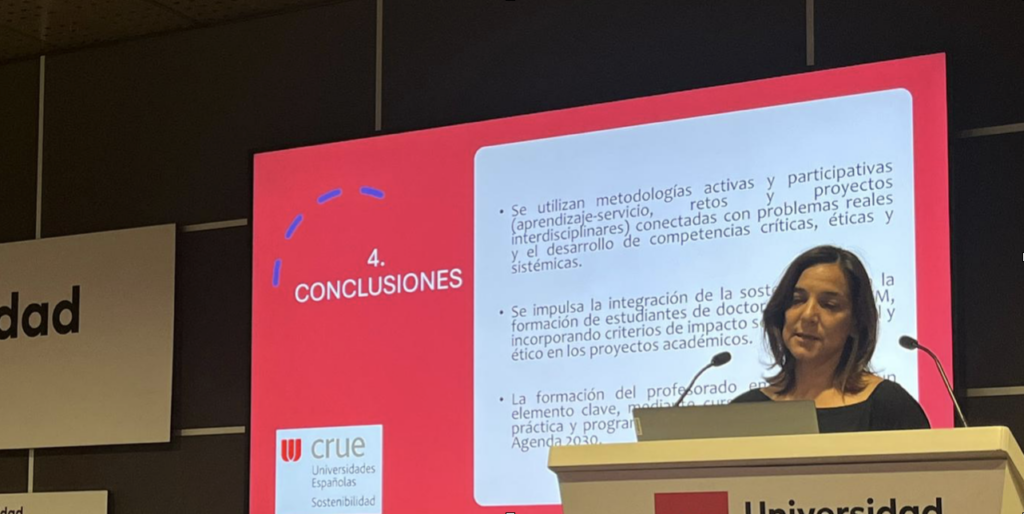
The study also highlights the growing integration of sustainability in teaching and research, as well as the consolidation of policies and awareness-raising actions in universities. The tool developed by GESU is confirmed as an effective instrument for diagnosis and continuous improvement, aligned with the Sustainable Development Goals.