


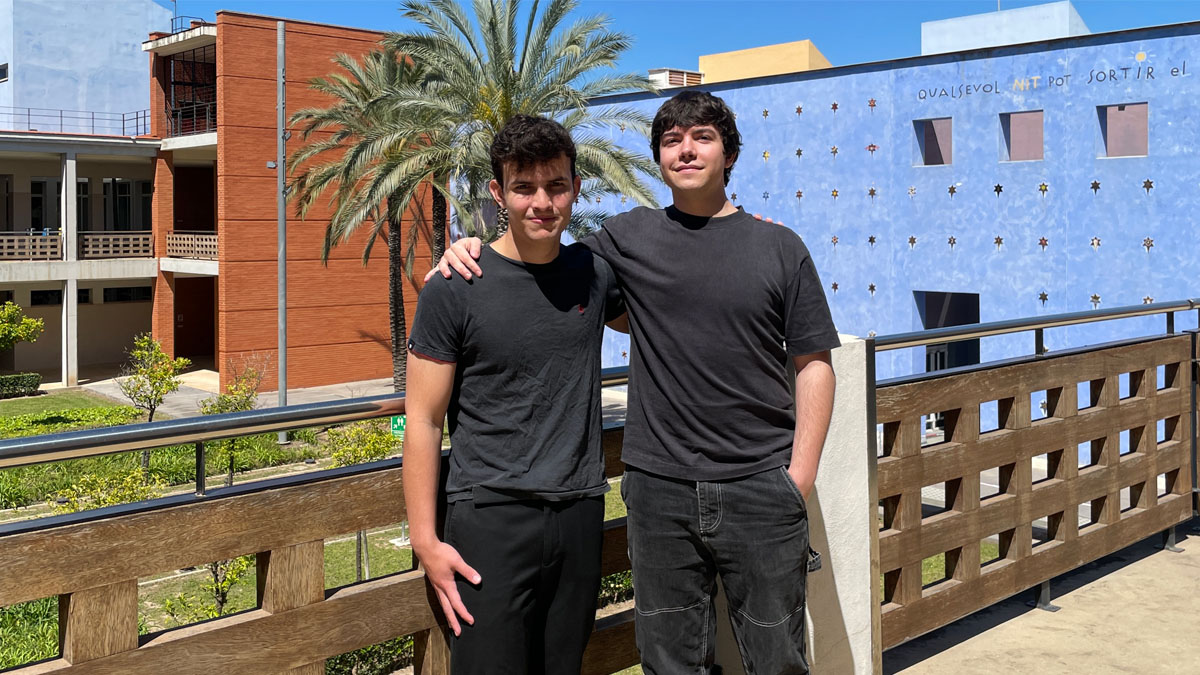
Advanced EPSG qualifies for the finals in China of the X Huawei ICT Competition with a project of intelligent management of the flow of trucks within the port of Valencia.
VirtualDoors, the project carried out by the UPV Spontaneous Generation group. Advanced EPSG has passed the second of the three phases of the Huawei ICT Competition and will be present in Shenzhen (China), from June 3 to 5, to dispute at the headquarters of the multinational technology company the final of a contest that, in its last edition, had the participation of more than 210,000 students from about 2000 schools in a hundred different countries.
Led by Renato Kafure Cavalcante student of the Double Degree in Telecommunication, Sound and Image Systems Engineering + Audiovisual Communication, ZhangTian Alex Liang of the Degree in Telecommunication, Sound and Image Systems Engineering and Mario Climent Jimenez currently pursuing the Degree in Interactive Technologies, Advanced EPSG is an initiative created in June 2025 with the aim of forming a technological team at the Gandia campus of the UPV.
“Advanced EPSG is designed for any student with a technological profile who is interested in developing real projects, especially in the field of artificial intelligence (AI), distributed systems, software engineering or telecommunications engineering,” explains Mario Climent, coordinator of the team. “It is not limited to specific degrees, but we are looking for people with a desire to build and get involved in projects that go beyond academia,” he adds.
From a reactive to a predictive and autonomous model
Thus VirtualDoors was born, a project for intelligent management of the flow of trucks within a port environment (SmartPort). “Today,” Climent explains, “there are already technologies such as OCR license plate reading, container identification or document validation, but they all work in an isolated and reactive way. In other words, they validate, but do not make decisions beyond allowing or denying access.”
“What we propose with VirtualDoors,” he continues, “is a layer of intelligence on top of that existing infrastructure. Each access becomes an intelligent node with local decision making capabilities through embedded AI, which not only validates, but also analyzes in real time the state of traffic within the port. The current problem is that traffic management is based on predictions built with historical data (previous days, weeks or months), which prevents it from adapting to the real situation at any given moment”.
“From there,” he says, “the system is able to anticipate potential congestion between gateways and terminals, and dynamically redistribute the flow of trucks before bottlenecks occur. This is achieved through coordination between multiple gates, traffic prediction, and adaptive visual signage that guides drivers to optimal routes. In short, we don’t replace what already exists, but make it intelligent, allowing us to move from a reactive model to a predictive and autonomous one.”
Financial rewards, official certifications and visibility in the technology ecosystem
Mentored by José Marín-Roig professor of the Department of Electronic Engineering at the Polytechnic School of Gandia, Advanced EPSG is composed of a team of 23 students who soon set out to demonstrate their potential in a world-renowned competition, the Huawei ICT Competition.
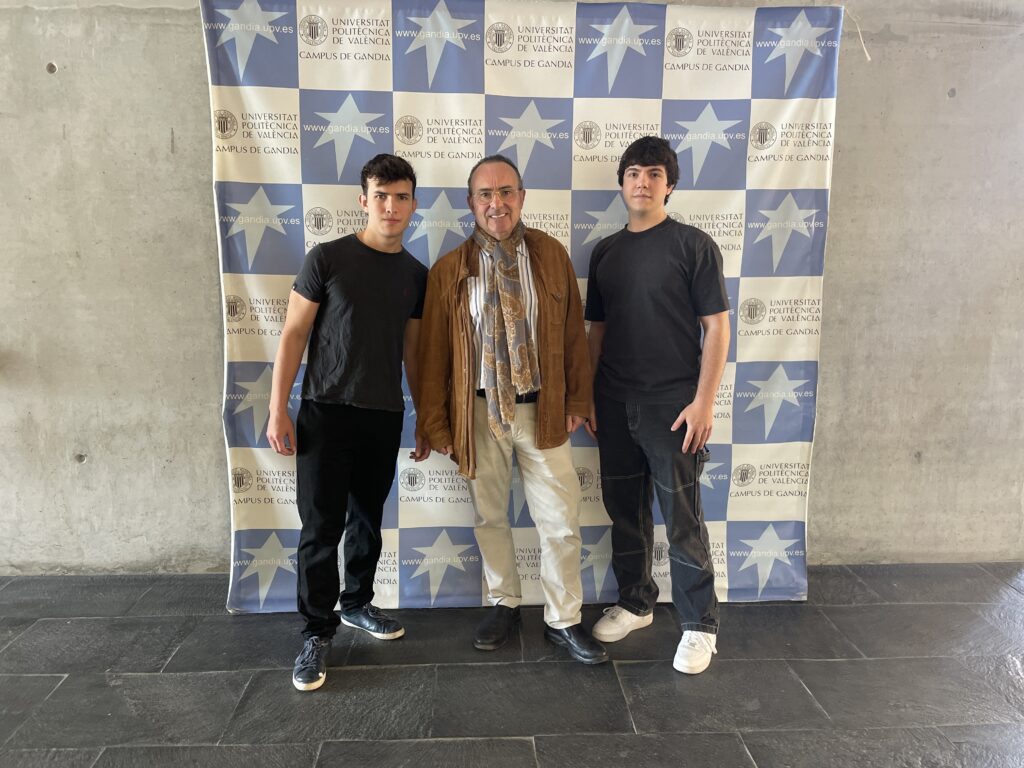
Aimed at student teams that develop and present technological solutions applied to real problems, the competition consists of three thematic areas – practice, teaching and innovation (VirtualDoors competes in the latter) – and three phases – national, regional and global – in which participants present their project before a jury that, in addition to the final result, evaluates the use of technologies, the design of the system, the quality of the implementation and the presentation itself.
“Looking ahead to the final,” says Climent, “we aspire to the global prizes of the competition, which include economic endowments, official Huawei certifications and, above all, visibility within the technological ecosystem. Beyond the prize itself, it is also a powerful opportunity for the future, both professionally and in terms of the development of the project itself.
“Studying at the UPV, the key to get here”.
On their way, Renato, Alex, Mario and the rest of their classmates do not forget the environment that accompanies and helps them, and to which they are grateful. “Studying at the UPV has been a key factor in getting here. Not only because of the technical base it gives you, but also because of the environment that allows you to develop this type of initiative,” says Mario himself.
“In our case, for example, the Degree in Interactive Technologies provides a fairly complete approach, since it combines programming, artificial intelligence, design of interactive systems and development of real projects. This means that you not only have technical knowledge, but also the ability to come up with complete, user-focused solutions, which is exactly what is required in a competition like this,” he adds.
“In addition,” he concludes, “the fact of having programs such as Generación Espontánea UPV makes it much easier to set up a team, work on real projects, have the freedom to develop ideas that go beyond academia, and gives you access to contacts and collaborations with external entities, as in our case with the port of Valencia, which is something differential.”