


Second year students of the Interactive Technologies Degree present their prototypes.
Second-year students of the Degree in Interactive Technologies (GTI) of the Gandia Campus of the Universitat Politècnica de València (UPV) have presented the work developed within the framework of the subject Internet of Things and Mobile Applications Project.
The initiative, promoted by the Innovation Chair, the event allowed to be shown the prototypes to representatives of collaborating companies such as Monica Morant (Citrosol), Maite Gomis (ARI Hub), Jose Luis Sendra (Abyss Games), Cristina Cuquerella (Moll Motor) and Alex Diaz (Toda Media).
Starting from a specific problem, each team developed a technological solution by applying knowledge and skills acquired during the months of study, in a working environment oriented to real challenges.
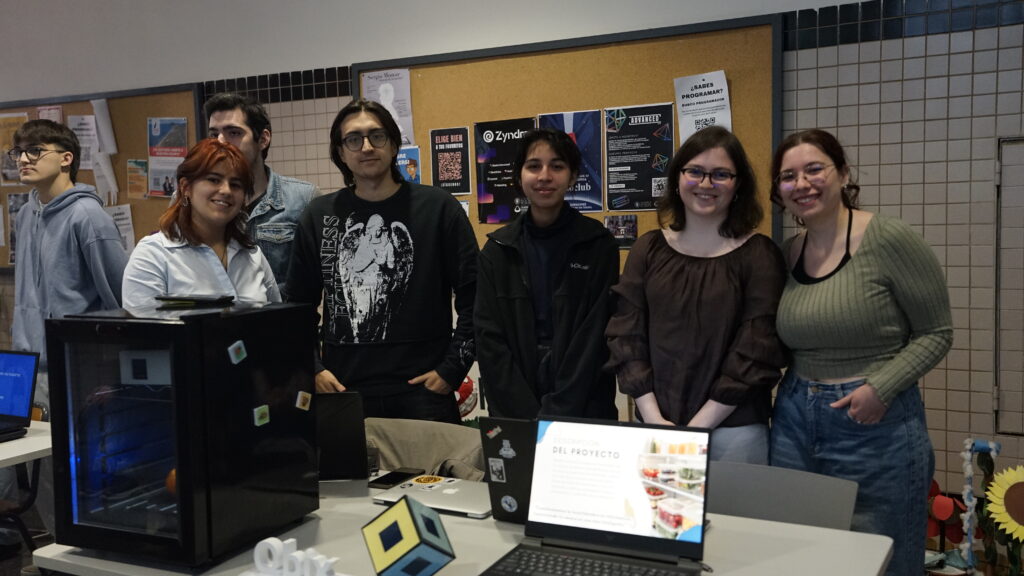
Qbix
Mar Cuenca Gil, Lucía Díaz Murcia, Minerva Maravilla Vidaurre, José Manuel Martín Terré, María José Rodríguez Álvarez and Marc Villalba Meseguer presented QBIX, “an IoT home kit that turns the refrigerator into a smarter device, allowing the user to manage their food, save, prevent unnecessary purchases and promote healthy habits”.
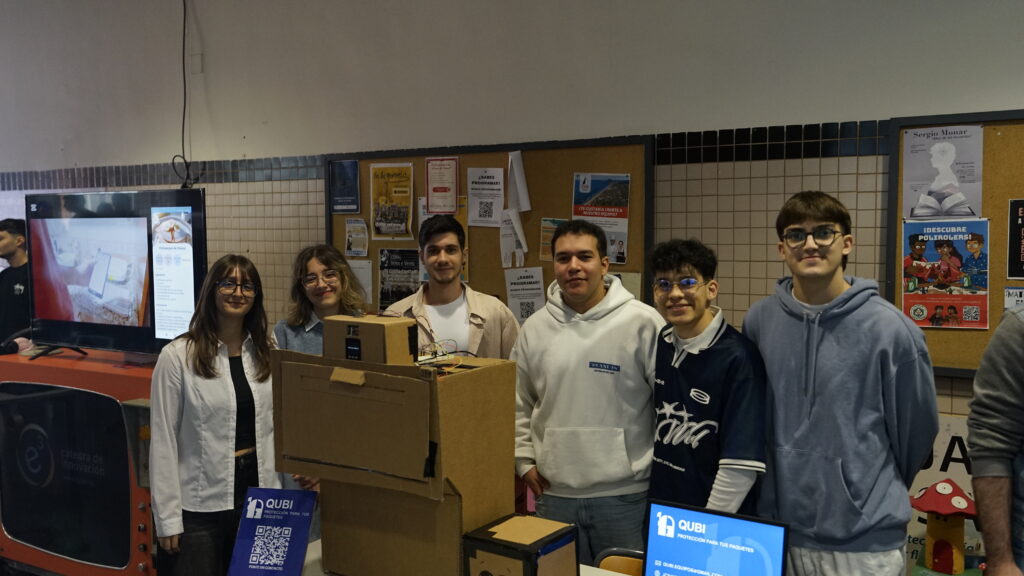
Qubi
QUBI is an IoT system that aims to “improve the management of deliveries, offering a practical, secure and automated solution for receiving packages when the person is not at home”. It has been developed by the team composed of Soufiane Belfquih El Khalfi, Judith Cívico Aporta, Élia García Pons, Víctor Nicolás Santiago, Aitor Segura Arribas and Fabián Useche Rivera.
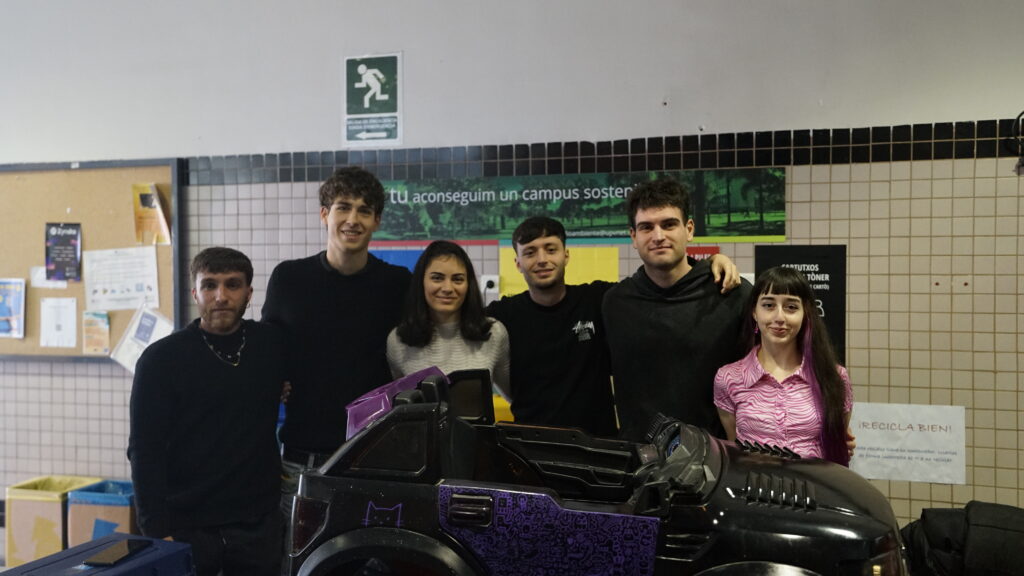
KöVa
Finally, the group integrated by Álvaro Ballester Grau, Aarón Blasco Blay, Enrique Buerbaum del Río, Matilde Calleja García, Joan Catalá Sendra and Julia Valen de Oliveira is responsible for KöVa, a system that allows “to monitor, locate and manage the vehicle remotely through a mobile application connected to the IoT prototype installed in the car”, thus improving the safety and control of the car.
Practical training with real challenges
For José Marín-Roig, director of the Chair of Innovation and deputy director of the Gandia Campus, this type of meeting allows “to discover the skills acquired by students throughout their university education”. In addition, he emphasizes that in the development of these projects, the students “take on challenges of real needs that society demands”.
With the presentation of the work developed within the framework of the Internet of Things and Mobile Applications Project, the Chair of Innovation reaffirms its commitment to practical training, connected with the business world and oriented to solving real problems through technology.