

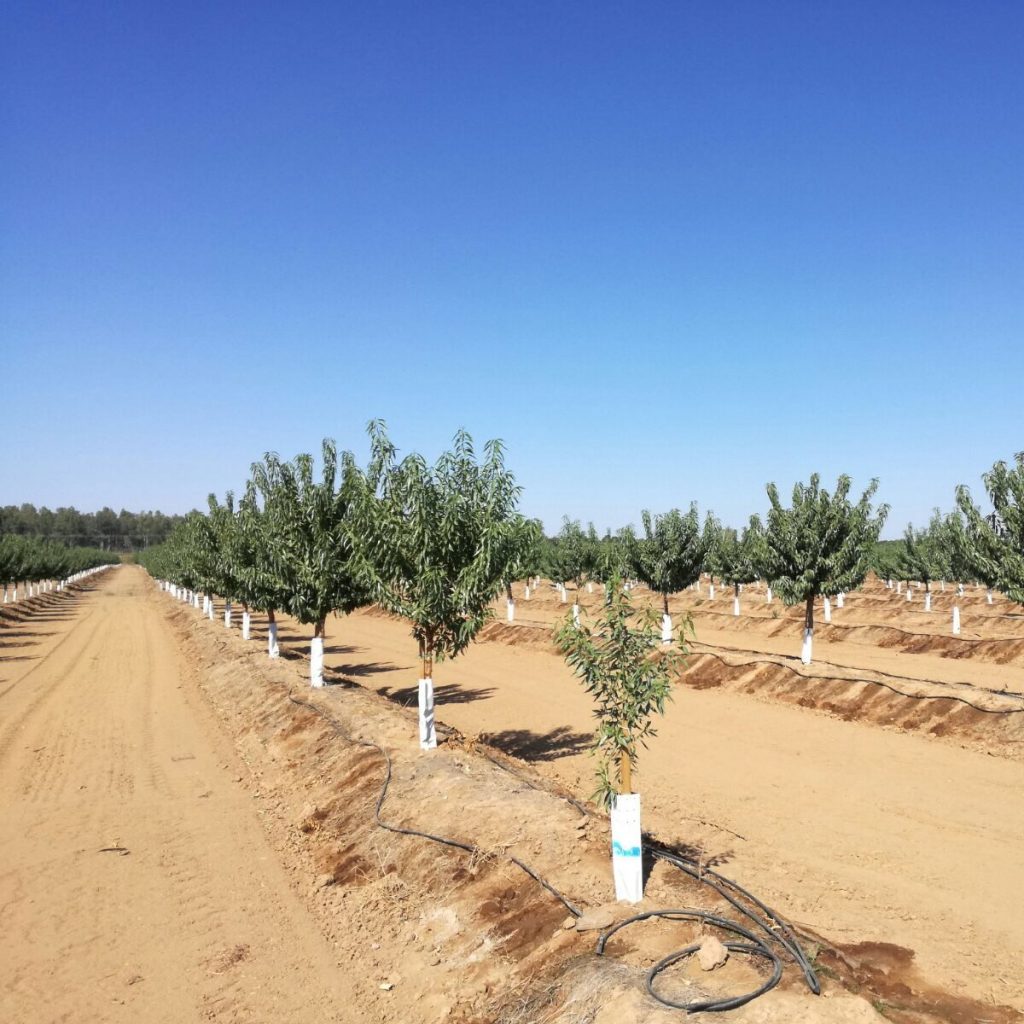
The Irrigation Engineering and Technology Group focuses on applied research aimed at optimizing water and energy use in pressurized irrigation systems, thereby contributing to more efficient and sustainable agriculture. Its research addresses current water-management challenges through the development of advanced agrohydrological models, the integration of sensor technologies in agriculture, and the creation of specialized tools for the design and sizing of irrigation networks, incorporating GIS for spatial planning.
The group combines experimental work at the Hydraulics and Irrigation Laboratory (LHIR) with field analysis to provide solutions to real-world problems affecting hydraulic installations and irrigation communities.
Its main research areas include the characterization and management of hydraulic components, the accurate estimation of crop water requirements using sensors and predictive algorithms, and the design of strategies to reduce energy consumption in pressurized irrigation systems.
In addition, the team develops specialized software for optimizing irrigation networks and localized irrigation subunits, incorporating hydraulic, energy, and agronomic criteria to improve the overall efficiency of these systems and reduce operating costs.
The group also provides advanced technical services, including emitter testing and certification in accordance with UNE-EN ISO 9261, flow meter calibration, and on-site hydraulic and energy audits for both electrically powered and photovoltaic systems. With its strong scientific and technological foundations, the group has established itself as a leading center for innovation in localized irrigation in agriculture.
Research areas
- Laboratory and field characterization and optimization of hydraulic components in irrigation systems, including hydraulic analysis and assessment of the performance of components and networks under real operating conditions.
- Development of predictive agrohydrological models and sensor-based systems to estimate crop water requirements by measuring plant physiological parameters or monitoring soil moisture in the root zone.
- Development of tools for the management and design of pressurized irrigation networks, integrating hydraulic and energy-efficiency criteria.
Services
Laboratory testing and technical characterization of hydraulic equipment (LHIR)
The unit has two laboratories equipped with advanced technology for the high-precision characterization and calibration of hydraulic components.
- Measurement and analysis of head losses in valves, meters, filters, and hydrants.
- Calibration and characterization of the metrological performance of flow meters and water meters.
- Testing and certification of irrigation emitters in accordance with UNE-EN ISO 9261.
Design and analysis of pressurized irrigation systems
- Technical consulting for hydraulic system design projects.
- On-site hydraulic and energy audits of pressurized networks, covering both grid-powered and photovoltaic systems, to optimize equipment performance and reduce energy, maintenance, and equipment replacement costs.
Computational Fluid Dynamics modeling and software development
- Advice on the selection and design of hydraulic components, including filters, hydrants, valves, and meters.
- Development of specialized software for sizing and optimizing pressurized irrigation networks and designing localized irrigation subunits, incorporating GIS-based spatial analysis tools.