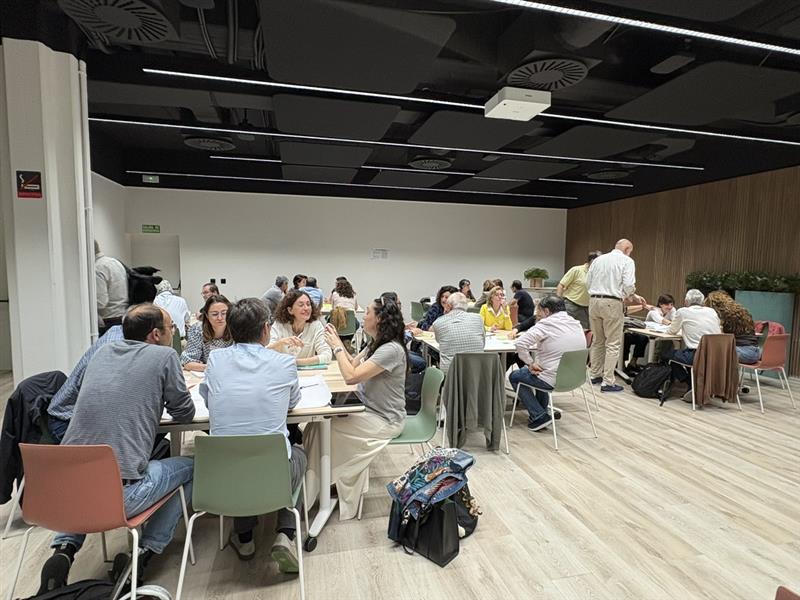
The Universitat Politècnica de València (UPV) organized, on April 28, a day of strategic reflection within the framework of the UPV SIRVE Plan, with the aim of rethinking its teaching model in the face of the profound technological, social and demographic changes that are transforming higher education.
The meeting, led by Jordi Mauri (Engineer and trainer of technical leaders), was structured in three sessions – “Tensions”, “Reflections” and “Challenges”- and brought together 87 academic leaders of the UPV, including directors and deputy directors of centers and departments in a participatory space aimed at identifying opportunities and challenges and laying the foundations of an educational model more adapted to the current context.
One of the key moments of the day was the round table moderated by the Director of the Strategic Planning Area, Rosario Perello and entitled “Reflections on what a university graduate needs to be/know in times of AI”, which was particularly notable for the participation of professionals with relevant careers and an active relationship with the UPV, either as graduates or as teaching collaborators.
Among them, architect and entrepreneur Raúl Polit Casillas, founder of the robotic architecture firm Arqess; technology entrepreneur Fran Arechaga, founder of the Truust.io platform; human resources and artificial intelligence expert Mónica Franco; and Mónica Bragado, business development manager at Celestica and former president of the Social Council of the UPV.
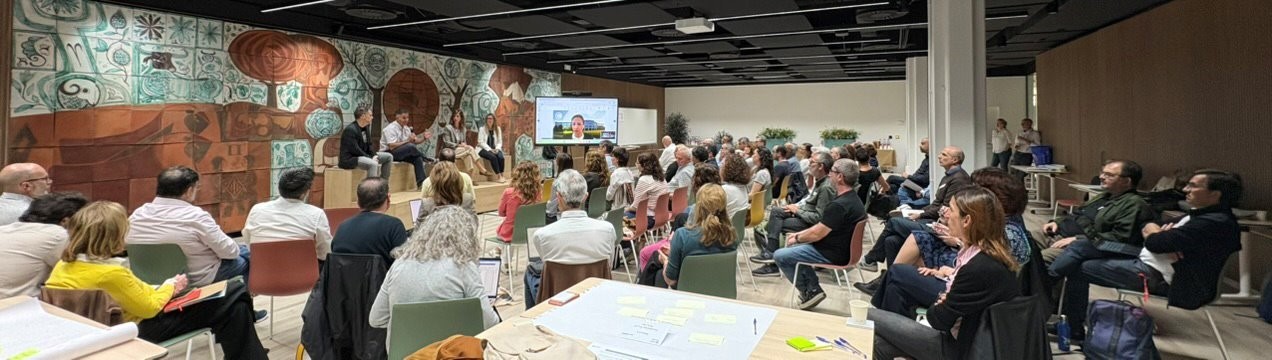
Their interventions have provided a particularly valuable perspective by connecting university education with the skills currently demanded in the professional environment. In this sense, they agreed on the need to train graduates with critical thinking, capacity for continuous learning, own criteria and adaptability in a context marked by the irruption of artificial intelligence.
During the day, the focus was on issues such as the diversity of student profiles, new forms of learning and assessment, and the growing impact of AI in educational processes. Based on these reflections, participants worked collaboratively to identify the main challenges that will guide the development of a solid, innovative and sustainable UPV teaching model.
The vice-rector for Planning, Studies, Quality and Accreditation, José Pedro García Sabater, stressed the importance of this participatory approach: “The more voices involved, the richer the conclusions and the more accurate the future steps”.
This conference is part of a broader process of active listening promoted by the UPV, within the framework of the SIRVE strategic plan, which will continue in the coming weeks with students, graduates and companies in the area, with the aim of integrating different perspectives and building a solid and differential teaching model aligned with the challenges of the future.
With initiatives such as this, the UPV reinforces its commitment to continuous improvement and consolidates its commitment to an educational model capable of anticipating the transformations of the environment and generating impact on society.