


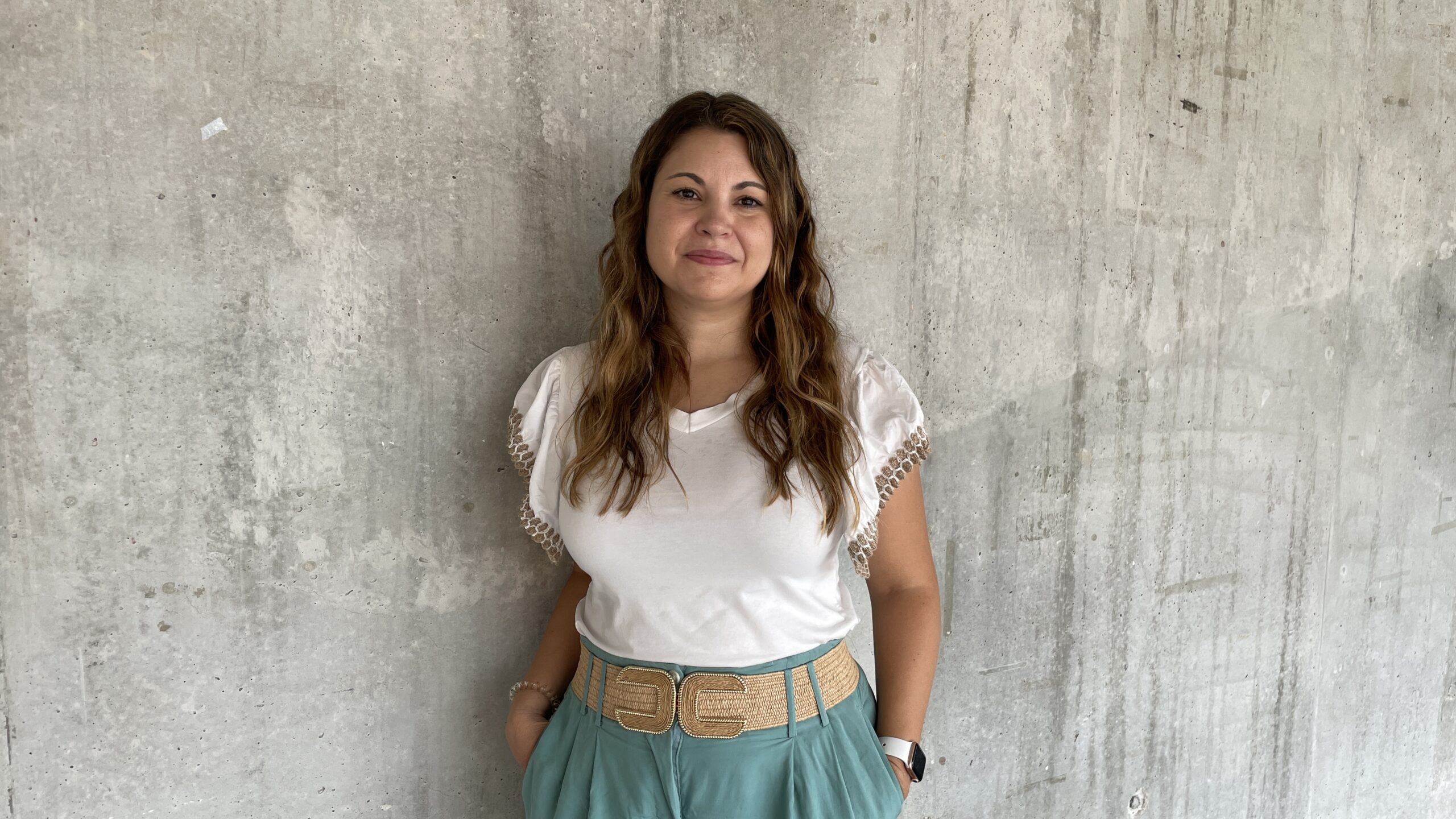
Ana González Suárez has been awarded a Leonardo Grant from the BBVA Foundation to develop a new technology to combat liver metastasis.
Ana González Suárez, a researcher at the Polytechnic University of Valencia (UPV), has received a Leonardo Scholarship in the field of engineering awarded by the BBVA Foundation to develop MetaPulse: A Next-Generation Electroporation Platform for the Selective Treatment of Liver Metastases, a research project that proposes a new generation of electroporating technologies for the treatment of multiple liver metastases.
“Current electroporating technologies allow for the focal treatment of tumours; that is, they are designed to target each tumor individually using needle-shaped electrodes,” explains González Suárez. With MetaPulse, the researcher proposes a shift in approach by developing flexible electrodes capable of adapting to the surface of the liver and covering large treatment areas simultaneously. “The goal is to lay the groundwork for a new generation of electroporating technologies that, in the future, can be translated into clinical practice and offer new therapeutic options,” she notes.
A paradigm shift
Electroporating is a technique that destroys tumour cells using high-intensity electrical pulses without the use of heat. This feature makes it possible to preserve particularly sensitive structures, such as blood vessels or bile ducts. However, current technologies require each tumour to be treated individually. MetaPulse aims to overcome this limitation using flexible electrodes capable of conforming to the surface of the liver and targeting large areas of tissue.
“From a scientific standpoint, MetaPulse represents a paradigm shift—moving from treating individual lesions to developing a technology capable of selectively targeting multiple metastases throughout the liver, while preserving as much healthy tissue as possible,” the researcher explains.
In addition to the scientific progress, González Suárez highlights the project’s social impact: “Liver cancer is the third leading cause of cancer-related death worldwide, and the liver is also the organ most frequently affected by metastases from other tumours. My goal with MetaPulse is to contribute to the development of a technology that, after successfully completing the necessary preclinical and clinical stages, can expand treatment options for patients who currently have very few alternatives.”
Science that addresses a clinical need
For the researcher, being awarded the Leonardo Fellowship represents significant support for the line of research she is pursuing at the UPV, particularly at the Gandia campus.
He also attributes the proposal’s success to a combination of an innovative idea, a proven track record in this field, and close collaboration with clinical specialists, including Dr. Fernando Burdío, head of the General Surgery Department at Hospital del Mar (Barcelona). “It was he who conveyed to me the clinical need to develop new solutions for patients with multiple liver metastases. That combination of a scientific challenge and a real medical need was the origin of MetaPulse,” he says.
The funding will enable the laboratory that González Suárez is setting up on the UPV’s Gandia campus to acquire new scientific equipment, including an impedance spectroscopy system, a high-performance computing station for simulations with realistic geometries, and the experimental materials needed to carry out the research.
“This funding is crucial because it will allow us to launch the project with the necessary resources and accelerate the development of the technology,” he says.
International Career
Ana González Suárez holds a degree in Telecommunications Engineering, with a specialization in Telecommunications Systems, from the UPV’s Gandia campus. She also completed a master’s degree in Biomedical Engineering and a Ph.D. in Biomedical Engineering: Technologies for Health and Well-being at the UPV. She subsequently conducted her research at the BCAM (Basque Centre for Applied Mathematics), Pompeu Fabra University, and the University of Galway, in addition to completing research stays at the Wellman Centre for Photomedicine at Massachusetts General Hospital and at Mount Sinai Hospital in New York.
Since September 2024, she has been a Ramón y Cajal researcher in the Department of Electronic Engineering at the UPV, where she leads a research project focused on the development of electroporating technologies for the treatment of cancer and cardiac arrhythmias.
Throughout his career, he has led international research projects and has received awards such as the IFMBE Young Investigator Award.
He currently teaches at the Bachelor’s Degree in Interactive Technologies on the Gandia campus.
Leonardo Scholarships – BBVA Foundation
The BBVA Foundation Leonardo Grants for Scientific Research and Cultural Creation They support projects developed by researchers and cultural creators who are at an intermediate stage in their careers.
In its 13th edition, out of a total of 1,896 applications, 59 projects were selected, representing a success rate of 3.1% and highlighting the high level of competition in the call for proposals. This year’s grant recipients will join the Leonardo Network, a community that now brings together 800 researchers and creators, along with the experts who have served on the program’s evaluation committees since its inception.