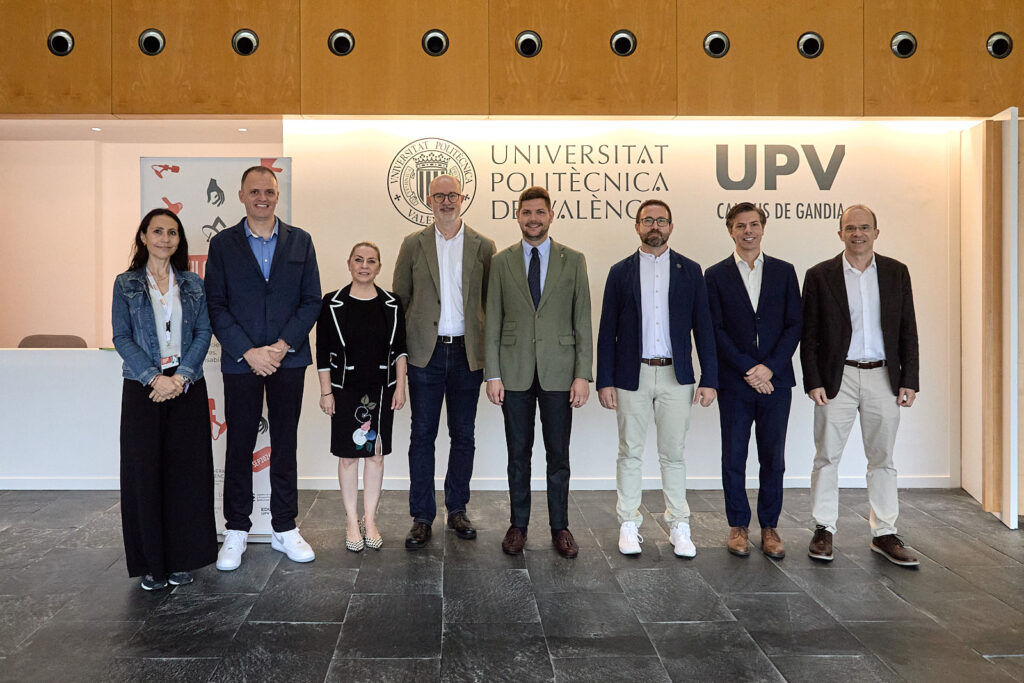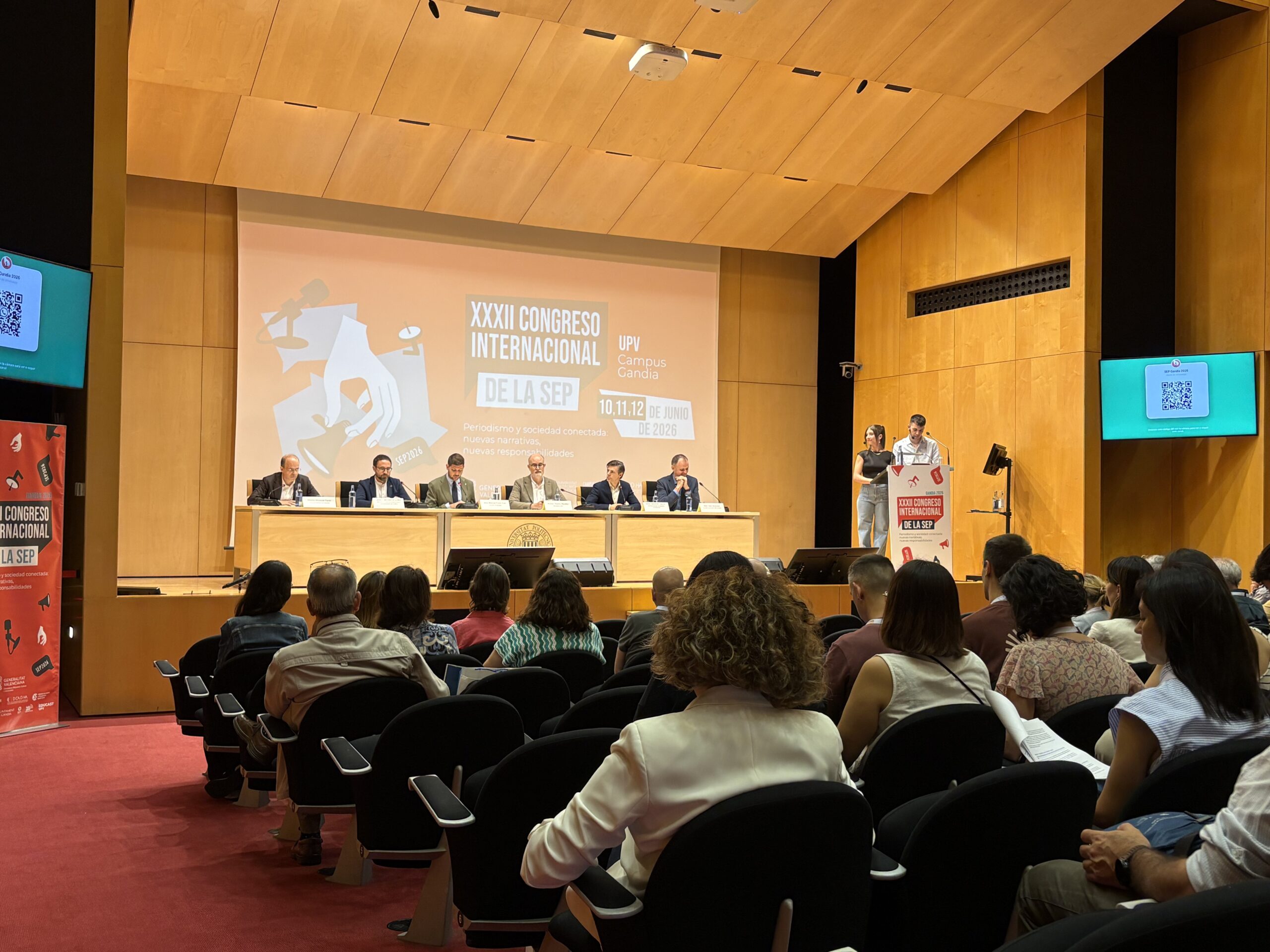
The International Congress of the Spanish Society of Journalism, held at the UPV’s Gandia Campus, brought together experts from various countries to reflect on the changes that are redefining the practice of journalism.
More than 150 researchers, faculty members, and communications professionals have participated in the 32nd International Congress of the Spanish Society of Journalism (SEP), held under the title “Journalism and the Connected Society: New Narratives, New Responsibilities.”
Over the course of three days, the Gandia Campus of the Universitat Politècnica de València (UPV) has become a leading venue for academic debate on the challenges that will shape the future of the journalism profession. Speaking on behalf of the campus administration, its director, Vicenç Almenar, highlighted “the consolidation of this campus as a venue for conferences and scientific and professional gatherings.” He also emphasized the importance of hosting an event of this nature—focused on issues such as the rise of artificial intelligence, misinformation, and new forms of news consumption—because it represents “significant recognition of the work carried out by the campus in the field of communication.”
New Narratives, New Responsibilities
The 32nd SEP International Congress was attended by specialists from national and international universities and research centers. In total, 129 scientific papers were presented by 242 authors from 43 academic institutions in various countries, reinforcing the international nature of a conference that addressed issues such as fact-checking, new information consumption habits among young people, the sustainability of digital media, local journalism, communication regarding the climate crisis, and media literacy.
The event also featured remarks by the Director General of Science and Research, Rafael Sebastián; the mayor of Gandia, José Manuel Prieto; the Vice Rector for Internationalization and Communication at the UPV, José Francisco Montserrat; and the president of the Spanish Society of Journalism, Andreu Casero-Ripollés.
The opening lecture was delivered by Portuguese researcher Madalena Oliveira of the Universidade do Minho, one of Europe’s leading specialists in sound studies and auditory culture. The conference concluded with a presentation by Tiziano Bonini, an international authority in the fields of radio, podcasting, and digital platforms, and author of the book *Algorithms of Resistance*. According to Professor Raúl Terol, chair of the conference’s organizing committee, “Oliveira and Bonini represent two key areas for understanding the future of communication: the sound ecosystem and the impact of digital platforms.”
The Role of Local Journalism in a Connected Society
In addition to the scientific sessions, the program included a roundtable discussion on community-based journalism, during which industry professionals analyzed the challenges and opportunities facing local media in a media ecosystem increasingly shaped by digital platforms and changes in news consumption habits.
The high turnout and the quality of the research presented have confirmed the relevance of a conference that has highlighted the need to rethink the role of journalism in a society that is increasingly connected and shaped by technological changes.