

Linear equations 2
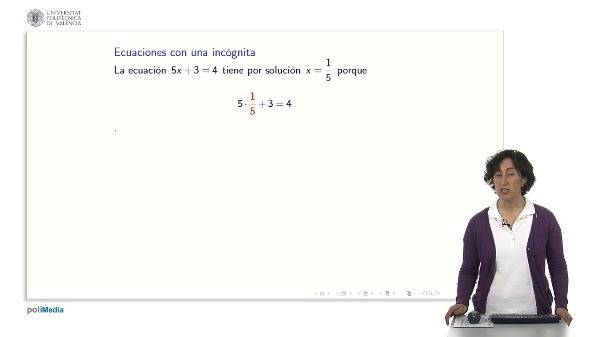
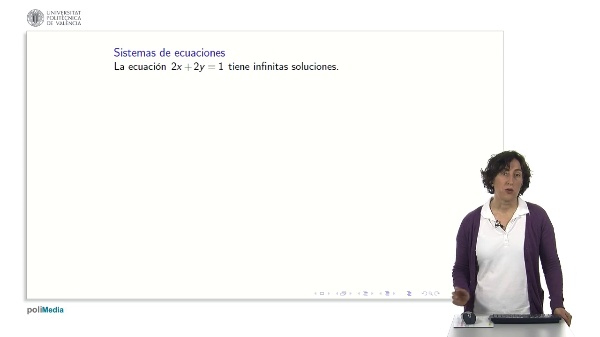
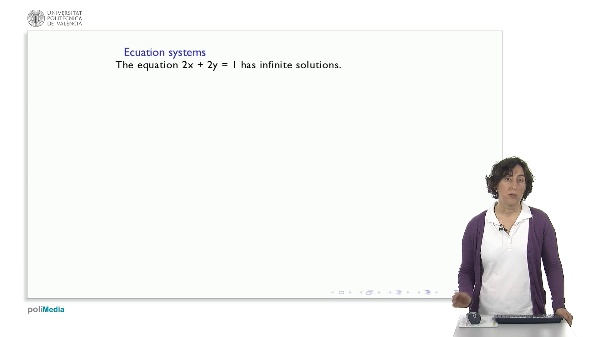
In this video, the presenter explains the concept of linear equations. They start by discussing single-variable equations, noting that solving an equation means finding values that satisfy the equation, which could result in one solution, many solutions, infinite solutions, or none at all. They introduce multi-variable linear equations, highlighting their typically infinite solutions, and illustrate how these represent geometric entities such as lines or planes in two or three dimensions, respectively. The video continues by defining a linear equation with 'n' unknowns as one where the variables do not appear as powers, products, or within transcendental functions. Coefficients and independent terms are explained. The presenter differentiates between the general solution, a set of all solutions, and particular solutions, which are individual sets of values satisfying the equation. The concept of particular solutions leading to the general solution is examined, demonstrating how variables are determined by others. Finally, the video addresses equivalence transformations, which are methods to convert an equation into another that has the same solutions, such as adding the same number or expression to both sides or multiplying the entire equation by a non-zero number. The video concludes with the application of these transformations to solve linear equations, indicating that understanding these principles is crucial for solving equations with several unknowns.