


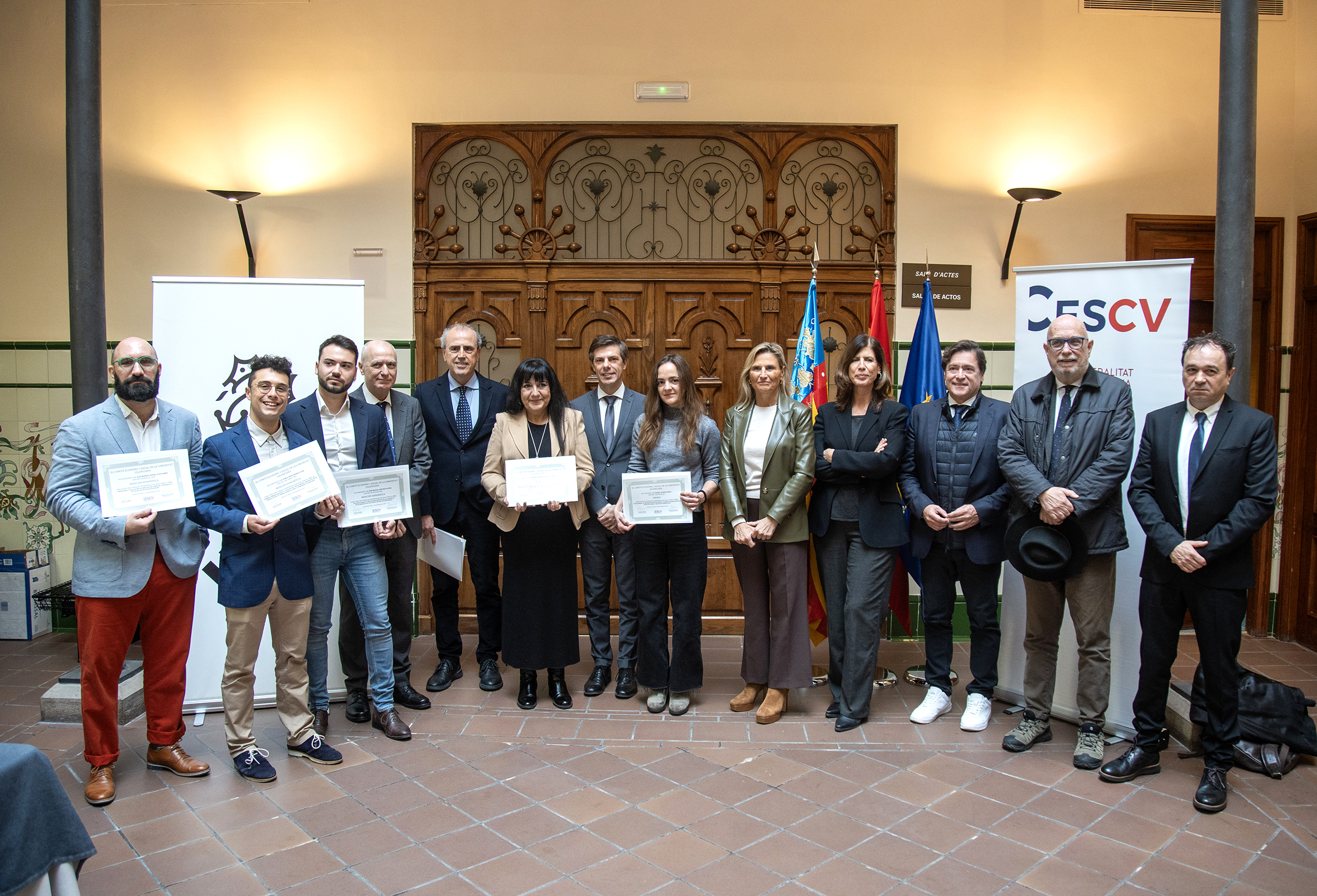
Professor Pablo Huerta’s doctoral thesis has been awarded by the Economic and Social Committee of the Valencian Community. Under the premise that “audiovisuals not only promote destinations: they can turn them into experiences”, the research highlights the potential of films and series as a tourist and cultural engine.
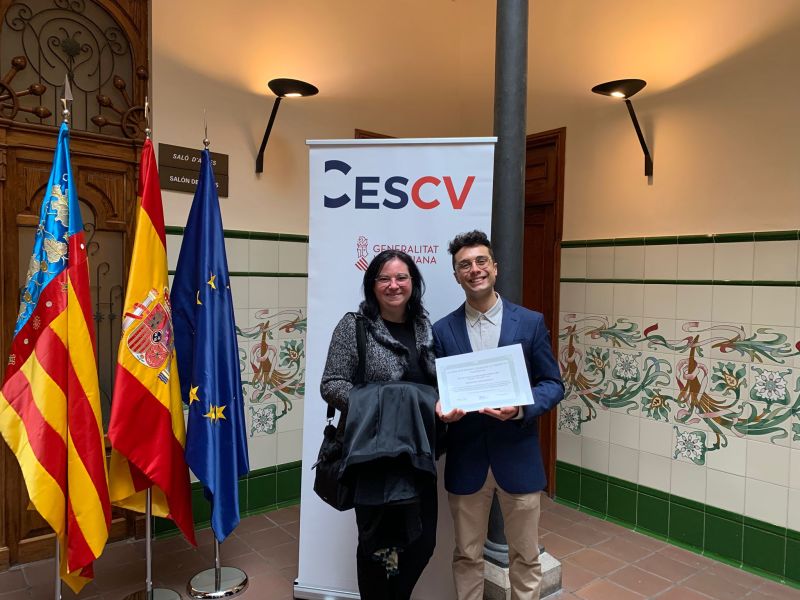
“Film tourism is not just a trend, but a strategic line to diversify the tourist offer and enhance the value of cultural heritage through audiovisuals”, Pablo Huerta, professor at the Gandia Campus of the Universitat Politècnica de València (UPV), says. His thesis, Film tourism and film routes in Spain: proposal of a film route model for the Valencian Region co-directed by the UPV professors Lourdes Canós and Germán Llorca, has been recognized by the Economic and Social Committee of the Valencian Community. The researcher is confident that this recognition will contribute to “make research visible and turn audiovisual fiction into a sustainable tourism product”.
Pablo Huerta’s work analyses how cinema and fiction series influence the image of destinations and travel motivations, and how this potential can be transformed into specific tourism products, through maps and film routes. The research is based on an extensive database that brings together more than 405 audiovisual productions -including films and national and international series- filmed in the Valencian Community. From this material, the research culminates in an operational proposal that includes 41 film maps and 60 film routes, designed to be consulted.
Audiovisual tourism experiences
Huerta defines cinematographic tourism, or film tourism, is a strategic line for today’s tourism sector, as it responds to the growing demand for experiences. “The visitor not only wants to see a place, but to live it with a story and be part of that story. There are those who enjoy following in the footsteps of their favourite characters or simply being in a space they have seen on the screen and sharing the experience on social networks,” he explains. In this sense, audiovisuals promote destinations and can turn them into memorable experiences.
In addition, this type of tourism allows diversifying supply, distributing flows to less saturated areas and combating seasonality, while integrating with local gastronomy, heritage and culture.
The film tourist, also known as the set-jetter, does not respond to a single profile, says the Gandia Campus professor. “It can range from those who discover a location by chance to those who plan their trip mainly motivated by a movie or a series”. In sociodemographic and behavioural terms, “it is usually associated with travellers with cultural interest, good use of technology, a tendency to research before the trip and respectful attitudes towards the environment they visit”. In some models, “they are identified as ‘interactive travelers’, with age ranges between 25 and 34 or 50 and 64, and often with medium-high spending power,” he adds.
Maps and film routes
The model proposed in Pablo Huerta’s doctoral thesis is articulated around two complementary tools: film maps, organized by provinces and counties, and interactive film routes, structured in thematic categories. In contrast to other existing initiatives, generally partial or focused on a single work, this one opts for a comprehensive and thematic approach. “This approach brings personality to the routes, makes them more varied and enhances the visitor’s experience by proposing stories and combinations, beyond a simple list of scenarios,” he says. “The idea is to move from loose locations to a coherent system of maps and routes, easy to consult, update and reuse.”
In economic terms, film tourism generates benefits at different stages: from the direct impact of filming on local spending to the return in brand image and reputation of the destination. The value lies in completing the circle: “shootings that leave local spending” and, subsequently, “locations that become tourist experiences throughout the year,” summarizes the researcher.
Some of the results of the research have already been applied in concrete initiatives, such as the four film routes (Castillo de Santa Bárbara, Historic Center, Port and Beaches and Tabarca Island) published by the Alicante Film Office and elaborated from the doctoral thesis.
In addition to his research work, Pablo Huerta has been teaching at the Gandia Campus of the UPV since September 2025 as Assistant Professor Doctor, in the Degree in Audiovisual Communication and in the Master’s Degree in Transmedia Communication. “I want students to understand audiovisuals as culture, industry and also as an engine for innovation and territorial development,” he concludes.