

Gauss method
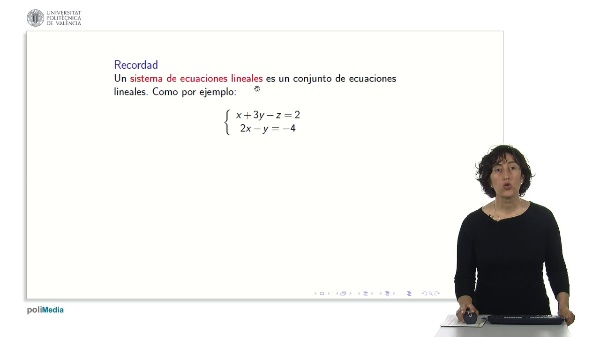
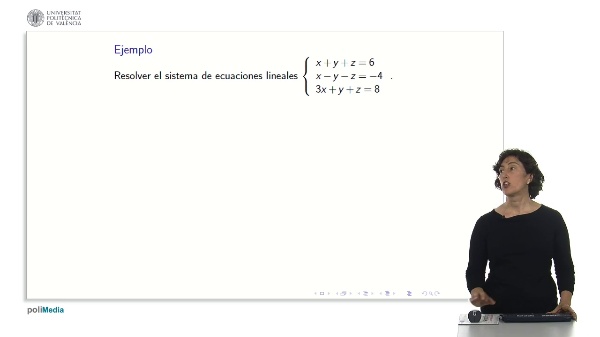
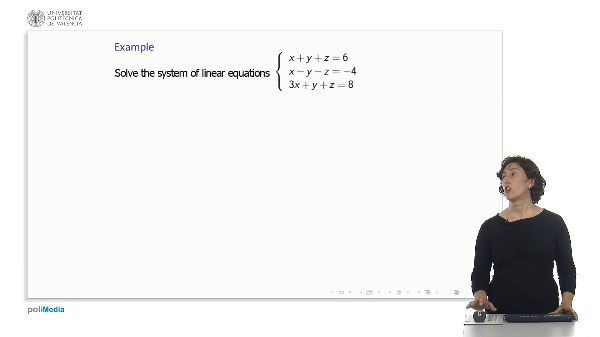
In this video, the instructor discusses the method for solving systems of linear equations. The method is explained as a means to simplify a given system to an equivalent one with the same solutions, enabling easier resolution. The method employs equivalence transformations to systematically eliminate variables and reduce the system to upper triangular form. The explanation begins with a basic understanding of what constitutes a linear equation system, how solutions might be determined or deemed non-existent based on the set of equations provided. The instructor then distinguishes between different types of systems: consistent and inconsistent, further identifying consistent systems as either determined (with a single solution) or indeterminate (with infinite solutions). Examples are provided to illustrate the process. The instructor first demonstrates the method on a simple system where variables can be isolated and substituted to find the solutions easily. Then, a more complex system is tackled to show the transformational steps involving subtraction and addition of equations to eventually make certain coefficients zero. This is followed by solving the transformed system to find the solutions for the variables. The instructor also introduces matrix notation to simplify the visualization of the process, highlighting that the focus is on manipulating the coefficients. Using this matrix approach, examples of both consistent determined and indeterminate systems are solved, showcasing the method¿s utility for securing solutions or identifying infinite solution sets characterized by parameters. Lastly, an inconsistent system is addressed, revealing that applying the method can lead to a contradiction, which indicates that no solution exists. The video concludes with an assertion that the method is an effective tool for solving and classifying linear systems according to their solution sets.