

Examples of systems of linear equations with parameters using the Gauss method
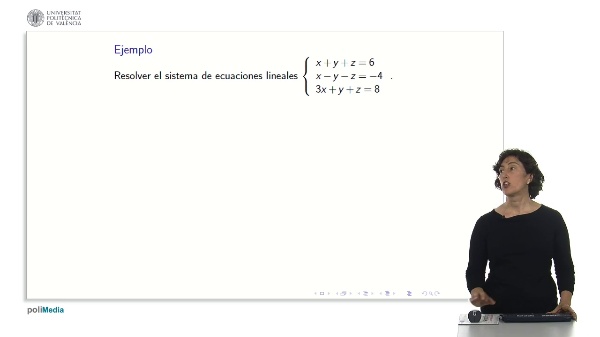
In this video, the instructor explains the process of solving systems of linear equations using the Gauss method, particularly focusing on systems with unknown coefficients, or parameters. To illustrate the Gauss method, the instructor walks through an example of a linear system with known coefficients. The method involves converting the system into an augmented matrix, performing row operations to achieve upper triangular form, then rewriting the matrix as a system of equations to determine that it is consistent and indeterminate with infinite solutions. The video proceeds with examples where not all coefficients are known, requiring parameterization. The instructor shows how to apply the Gauss method to these systems, emphasizing the importance of not dividing or multiplying by zero. The solution process includes converting the system to an augmented matrix, carrying out row operations to introduce zeros below the leading coefficients, and rewriting the system to evaluate its nature and solutions based on the value of the parameters. The explanation concludes by looking at different cases depending on the parameter values. The instructor explains that depending on these values, a system may be consistent with infinite solutions (indeterminate), consistent with a unique solution (determined), or inconsistent without any solution. Key insights into how parameter values affect the types of solutions that can be obtained are demonstrated through step-by-step examples.




5:34 · 2019