
Microplastics in the water
The Research Institute for Chemical Technology (CSIC-UPV) has developed a system that completely eliminates the microplastics released by polyester clothing in washing machine water
[ 04/11/2026 ]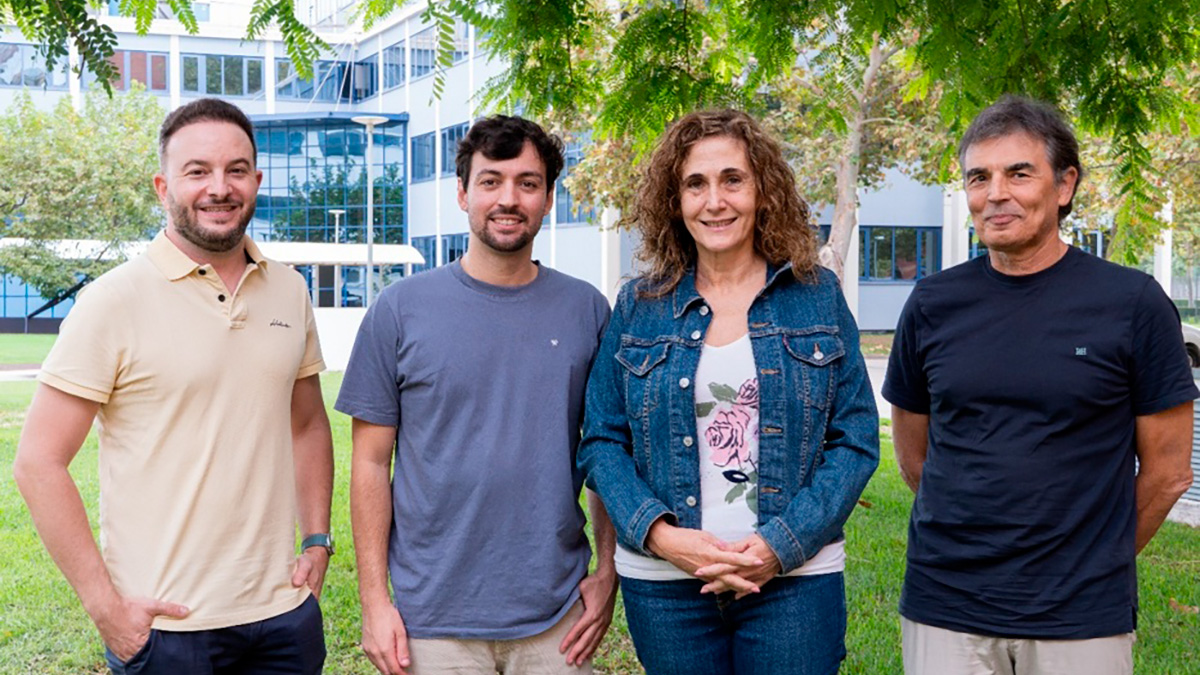
A study developed by the Research Institute for Chemical Technology (ITQ), a joint centre of the Spanish National Research Council (CSIC) and the Universitat Politècnica de València (UPV), has led to the development of a purification system that retains and completely removes microplastics from water. The innovative system is designed to clean water from the domestic washing of polyester garments and, in a single stage, combines the filtration of plastic microfibres from fabrics with their complete removal via photocatalysis—that is, using light. This method could be used in industrial laundries or at wastewater treatment plants. The research has been published in the journal Chemical Engineering Journal.
Microplastics are a persistent environmental threat. Particularly notable among them are those made of PET (polyethylene terephthalate), a plastic very widely used in bottles, cleaning products, and textile fibres, which is released during clothes washing. This new water treatment system, developed by the Pama group at the ITQ , is based on a material composed of sand and silica microspheres coated with titanium dioxide. "The sand acts as a filter that traps the microplastics, while the applied ultraviolet light activates the titanium dioxide to generate substances capable of degrading the microplastics," explains Francisco Boscá, a researcher at the ITQ (CSIC-UPV).
"When the material is placed in a continuous-flow tubular reactor illuminated by LEDs, the microplastics are simultaneously produced and degraded," adds María Luisa Marín, a researcher at the ITQ and professor at the UPV. Without illumination, the sand bed retains only about 70 % of the microplastics and would eventually become clogged; hence the important role of photocatalysis, a process that accelerates a chemical reaction using light and a catalyst
"With the system we have developed, as well as separating the microplastics, we achieve their complete degradation. This aspect is particularly important because all previous studies on the removal of microplastics from water only described their partial degradation, resulting in the generation of smaller particles—nanoplastics—which did not solve the environmental problem," explains Carlos Company-Doménech, a pre-doctoral researcher at the ITQ and lead author of the study.
The system has been tested continuously using water from the domestic washing of polyester garments, without altering its pH or adding chemicals to facilitate degradation. The results showed complete removal of the PET microplastics present in the water generated by washing textiles with tap water. Various analytical techniques confirmed both the disappearance of the microplastics and their transformation into simpler compounds.
Another advantage of the material is its reusability. In fact, the research team treated more than 50 litres of water with the same material, which could be reused after undergoing a regeneration process between cycles. Furthermore, no titanium was detected in the treated water.
Practical applications
"These results represent a step forward in the development of technologies that integrate filtration and photocatalysis; they open up new possibilities for the treatment of water contaminated by microplastics and suggest that the technology could be scaled up," explains Alberto Blázquez-Moraleja, a postdoctoral researcher at the ITQ also involved in the research.
So far, the system has been evaluated at a laboratory scale, using water from detergent-free washing processes and with treatment times exceeding two and a half hours. Although it is still necessary to optimise the process to improve its performance, the researchers highlight that it could be explored, in the medium term, as a complementary module in industrial laundries textile industry processes, or wastewater treatment plants, particularly in watercourses with significant releases of plastic fibres. Furthermore, it is being studied for the removal of various microplastics from other types of water, such as the waters of the Albufera de València.
Reference:
Carlos Company-Domenech, Alberto Blazquez-Moraleja, Francisco Bosca, M. Luisa Marin, Scalable continuous-flow photocatalytic system based on a TiO2-coated sand composite for microplastic mineralization, Chemical Engineering Journal. DOI: https://doi.org/10.1016/j.cej.2026.180838
Outstanding news
 Study a degree at the best technological university in Spain
The Universitat Politècnica de València is ranked number 1 among Spanish technology universities, according to the Shanghai ranking
 Highly Cited Researchers 2025
Avelí Corma, Juan Bisquert and Luis Guanter, the international scientific elite with a Universitat Politècnica de València hallmark
 Historic Milestone in Spanish Higher Education
The UPV inaugurates the Beihang Valencia Polytechnic Institute, the first Spanish university center in China
 Study in English
The UPV offers eight degrees, 16 master's and 650 courses in English for the 2025-26 academic year
 A Latin Grammy... with the UPV hallmark
'Music teaches us to listen and live together,' says Rafael Serrallet, Doctor of Music at the UPV, awarded in Las Vegas as the author of the Best Instrumental Album of 2025
 THE Impact Ranking
The UPV, the Spanish university with the greatest social and economic impact in the world