
Preventing disinformation from going viral
The UPV develops an early-warning system to detect disinformation at risk of going viral in the early stages of a crisis
[ 13/10/2026 ]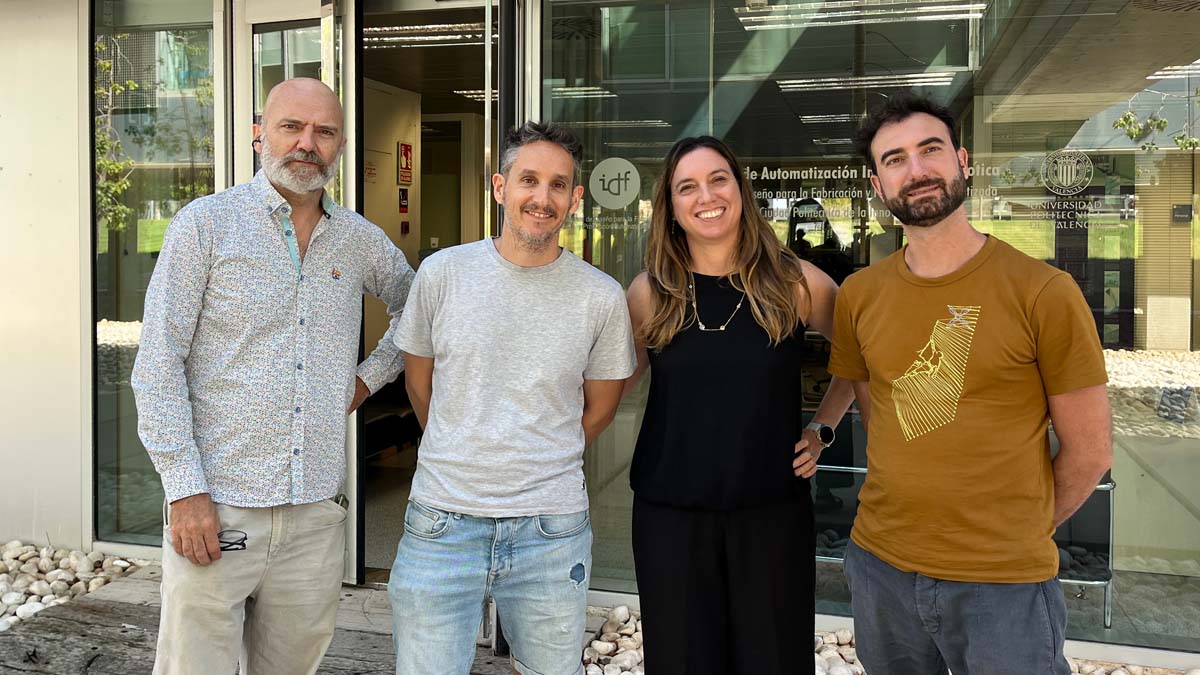
Researchers at the Universitat Politècnica de València (UPV) have developed a new early-warning system that enables identification, in the early stages of a crisis, of which potentially false or misleading content is at greater risk of going viral. The method, known as the Disinformation Diffusion Virality Risk Index (DDVRI), is designed to help prioritise which messages should be reviewed first by fact-checking and communications teams.
The research was carried out by J. Ernesto Solanes, Juan José Climent-Ferrer, Flavio Moriniello, Ana Martí-Testón, Adolfo Muñoz and Luis Gracia, all members of the Hume group at the UPV's Institute of Design and Manufacturing. "It is not enough to determine whether a piece of information might be false; it is also necessary to know whether it is likely to spread widely and become a significant problem. And that is precisely what our work enables us to release," notes Juan José Climent Ferrer.
The DDVRI analyses only data available during the early stages of a message's circulation, including its content, source characteristics, dissemination rate, and propagation structure. The system then generates a classification that enables verification resources to focus on the content posing the greatest risk.
Three times as many high-risk cases among early alerts
The UPV team has evaluated the methodology using two open databases. The first, PHEME, compiles Twitter conversations and rumours associated with current events; the second, CoAID, includes both false and true news stories and claims relating to COVID-19, along with data on their interaction on social media.
In the PHEME experiment, the system used the first 6 hours of activity to estimate which content would achieve high reach within a 72-hour timeframe. Among the 50 messages ranked highest for each event, the proportion of content that combined factual risk and high reach was approximately three times the average prevalence of such cases in the analysed dataset.
The results with CoAID also confirmed the tool's usefulness in prioritising the highest-risk content at the top of the rankings. In one of the model's configurations, 27 per cent of the top 50 selected messages corresponded to cases that combined disinformation and high amplification.
A tool for prioritisation, not censorship
The IDF team outlines DDVRI as a support tool for fact-checking teams, institutions and communication services working with limited fact-checking capacity. The alerts guide, whose content to examine first, verifying its accuracy, and any subsequent decisions, remains the responsibility of the human teams.
"The system is not designed to automatically decide which content should be removed from a social media platform. Our aim is for the system to function, so to speak, as a triage and prioritisation tool, helping human fact-checking teams, institutions or media organisations to decide where to focus their often-limited fact-checking capacity first," explains Juan José Climent Ferrer
The work has received funding from the European Union's Digital Europe programme, through the AI-SECRETT project, as well as from the Spanish Government and the Valencian Regional Government.
Reference
Solanes, J. E.; Climent-Ferrer, J. J.; Moriniello, F.; Martí-Testón, A.; Muñoz, A.; Gracia, L. Explainable Early-Warning of High-Amplification Crisis-Related Disinformation in Social Media Streams. Electronics, 2026, 15, 3586. DOI: 10.3390/electronics15163586.
Outstanding news
 Study a degree at the best technological university in Spain
The Universitat Politècnica de València is ranked number 1 among Spanish technology universities, according to the Shanghai ranking
 Highly Cited Researchers 2025
Avelí Corma, Juan Bisquert and Luis Guanter, the international scientific elite with a Universitat Politècnica de València hallmark
 Historic Milestone in Spanish Higher Education
The UPV inaugurates the Beihang Valencia Polytechnic Institute, the first Spanish university center in China
 Study in English
The UPV offers eight degrees, 16 master's and 650 courses in English for the 2025-26 academic year
 A Latin Grammy... with the UPV hallmark
'Music teaches us to listen and live together,' says Rafael Serrallet, Doctor of Music at the UPV, awarded in Las Vegas as the author of the Best Instrumental Album of 2025
 THE Impact Ranking
The UPV, the Spanish university with the greatest social and economic impact in the world