

Objective: Improving control of real vehicle emissions
A study by the UPV contributes to the development of anti-pollution regulations that are more representative of what happens on the road
[ 03/10/2026 ]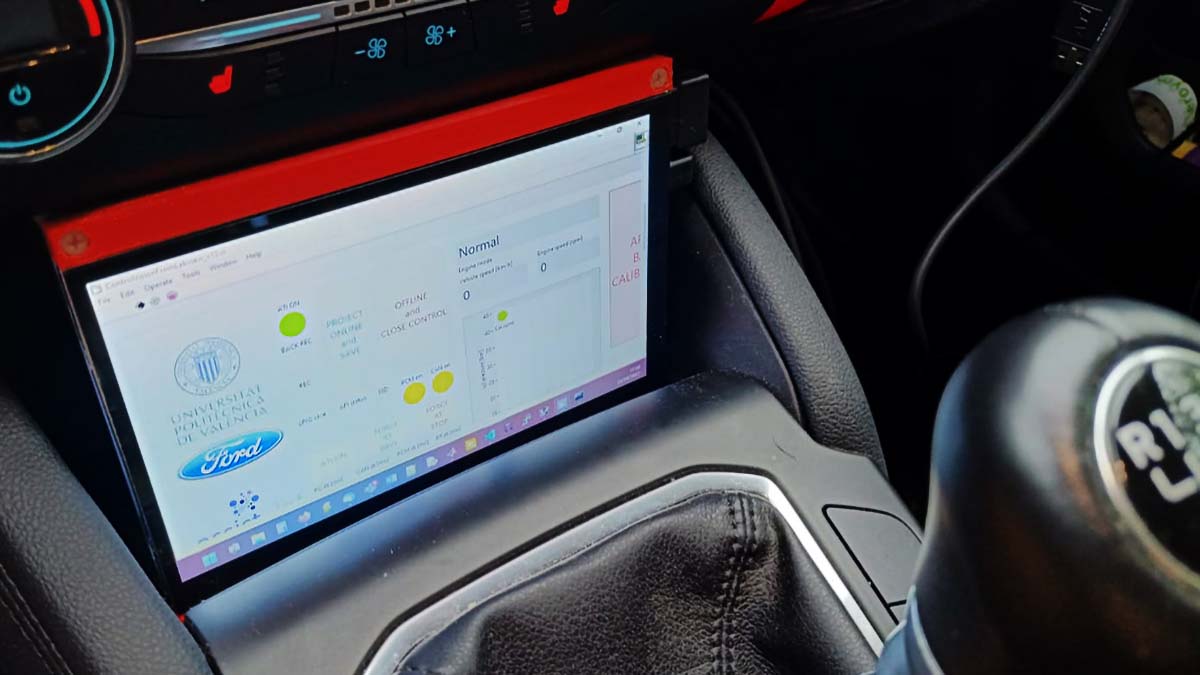
Helping European regulations to reflect better the actual pollution levels produced by vehicles when driving on the road. This is the aim of a study by the Universitat Politècnica de València (UPV), which analyses real-world driving data to evaluate new emissions monitoring tools. Its findings have been published in *Transportation Research Part D: Transport and Environment*.
"Emissions regulations have evolved from laboratory tests towards increasingly representative conditions; however, there are still discrepancies between the results obtained in type-approval procedures and the actual performance of vehicles on the road," explains Carlos Guardiola, a researcher in the Thermal Engines and Machines Department at the UPV and leader of the study.
According to Guardiola, type-approval tests are conducted under specific conditions. They cannot replicate the full range of situations encountered during a vehicle's everyday use. Short urban journeys, cold starts, traffic jams, or roads with steep gradients can lead to recorded emissions while driving that differ from those obtained in type-approval tests.
"In our study, we worked with data obtained directly during vehicle operation to gain a better understanding of these differences and to evaluate tools that would allow for a more representative monitoring of their emissions," adds Alvin Barbier, a researcher at the UPV and co-author of the paper.
Detecting when a vehicle emits more than expected
Specifically, the UPV team has studied the relationship between the amount of nitrogen oxides (NOx) emitted and the fuel consumed – one of the new indicators covered by Euro 7, the new European regulation governing vehicle pollutant emissions and strengthening their monitoring throughout a vehicle's lifespan.
The researchers assessed this indicator using road-based data from a Euro 6d-Temp diesel vehicle. The study shows that analysing information accumulated over longer distances helps to distinguish a problem with the emission control system from isolated episodes of high emissions caused by specific driving conditions.
"This distinction is important. The fact that a vehicle records high values during a specific journey does not necessarily mean there is a problem with its emissions control system. A short urban journey, driving in a circle at low speed or certain operating conditions may cause temporary spikes that must be interpreted correctly," says Carlos Guardiola.
Regulations better aligned with real-world driving conditions
The study forms part of the MUSE project (Multi-sensor layout architecture for advanced emission monitoring in connected fleets), funded by the State Research Agency, which uses vehicle sensors and connectivity to improve emissions monitoring.
As the UPV team highlights, the introduction of Euro 7 and the new on-board monitoring systems will gradually provide more information on vehicle emissions during everyday use. This data can help to detect anomalous behaviour better and, at the same time, identify situations in which type-approval procedures release a less accurate representation of what happens on the road.
"We aim to provide evidence obtained directly on the road that will help improve monitoring systems and develop future emissions regulations that are increasingly aligned with what vehicles actually emit," concludes Carlos Guardiola.
References
Barbier, A.; Salavert, J. M.; Hausberger, S.; Palau, C. E.; Guardiola, C. "Identifying high-emitting Euro 7 vehicles with the NOx-to-fuel mass ratio". Transportation Research Part D: Transport and Environment, 151, 105121 (2026). DOI: 10.1016/j.trd.2025.105121.
Barbier, A.; Salavert, J. M.; Palau, C. E.; Guardiola, C. "Analysis of the Euro 7 on-board emissions monitoring concept with real-driving data". Transportation Research Part D: Transport and Environment, 127 (2024). DOI: 10.1016/j.trd.2024.104062.
Outstanding news
 Study a degree at the best technological university in Spain
The Universitat Politècnica de València is ranked number 1 among Spanish technology universities, according to the Shanghai ranking
 Highly Cited Researchers 2025
Avelí Corma, Juan Bisquert and Luis Guanter, the international scientific elite with a Universitat Politècnica de València hallmark
 Historic Milestone in Spanish Higher Education
The UPV inaugurates the Beihang Valencia Polytechnic Institute, the first Spanish university center in China
 Study in English
The UPV offers eight degrees, 16 master's and 650 courses in English for the 2025-26 academic year
 A Latin Grammy... with the UPV hallmark
'Music teaches us to listen and live together,' says Rafael Serrallet, Doctor of Music at the UPV, awarded in Las Vegas as the author of the Best Instrumental Album of 2025
 THE Impact Ranking
The UPV, the Spanish university with the greatest social and economic impact in the world