

Quality of European rivers
A study by the UPV confirms a general improvement in the pollution levels of European rivers, but warns that the pace of improvement remains insufficient. Spain and Bulgaria face the most critical situations
[ 25/09/2026 ]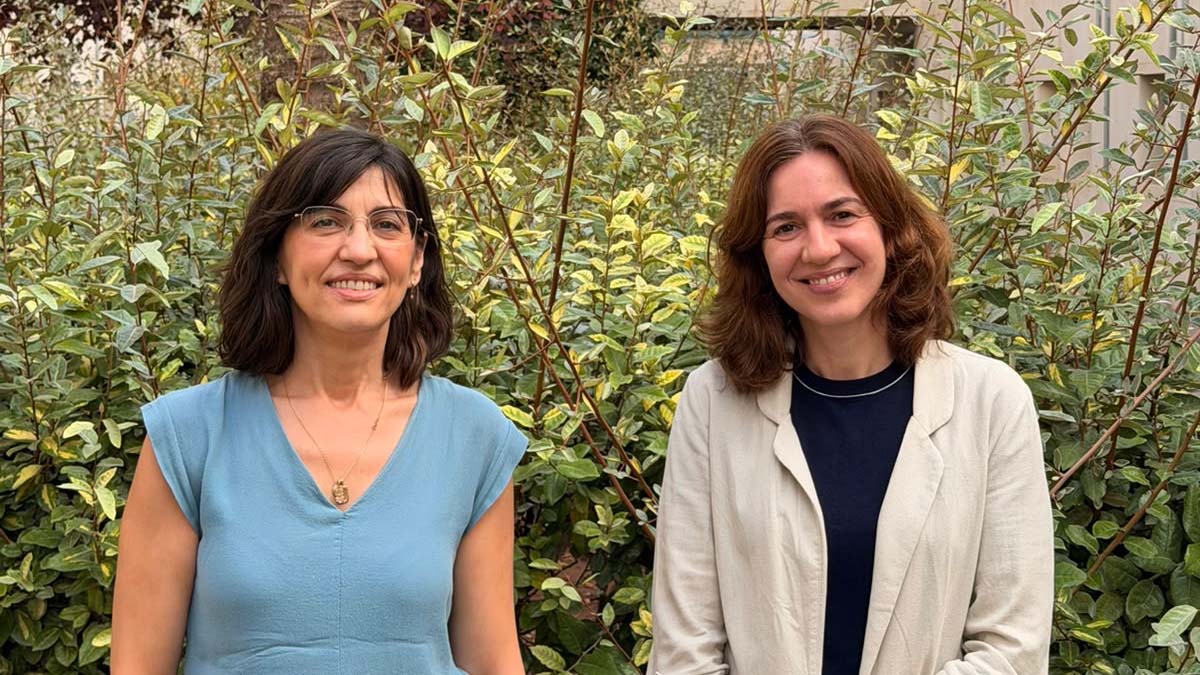
The quality of European rivers has improved in recent years, but not at the pace required to meet the environmental targets set for 2030. This is one of the main conclusions of a study led by researchers María Pachés Giner and Remedios Martínez from the Institute of Water and Environmental Engineering at the Universitat Politècnica de València (UPV), published in Environmental Science and Pollution Research.
Analysis of data available between 2015 and 2021 shows that organic pollution decreased in 14 of the 18 countries studied, while phosphate concentrations fell in 11 of the 16 countries for which sufficient information was available. However, these improvements alone do not guarantee that the targets set for the end of this decade will be met.
In fact, although seven countries are currently in a favourable position, only Slovenia is on a trajectory fully compatible with the 2030 environmental targets. Finland, Estonia, Ireland, Italy and Denmark also received a positive assessment. Still, the observed trends indicate that they will need to maintain or strengthen their management policies to sustain levels considered sustainable. "The results show that it is not enough simply to know the current state of rivers. It is essential also to analyse how quickly their quality is improving and to check whether that pace will enable the targets set for 2030 to be met," explains María Pachés, lead author of the study.
The state of the Spanish rivers
At the other end of the scale are Belgium, Bulgaria, Lithuania, Romania, Sweden and Spain, which face some of the greatest challenges. Spain and Bulgaria present the most critical situations, as they combine high levels of pollution with unfavourable trends in some of the indicators studied. In the case of Spain, the analysis reveals that, although the organic pollution load has fallen, it remains high, and phosphate concentrations increased during the period 2015–2021. "This trend takes us further away from the 2030 environmental targets and highlights the need to strengthen measures aimed at controlling nutrient inputs into river ecosystems," says Remedios Martínez, a researcher at IIAMA-UPV.
Potential of the developed tool
To obtain these results, the team has developed the Human Pressure on River Ecosystems (HPRE) indicator. This new methodology transforms the data available from Eurostat into a comparable scale ranging from 0 to 100.
The indicator combines biochemical oxygen demand, linked to organic pollution, and phosphate concentration, associated with nutrient inputs and eutrophication processes. In addition to determining the situation in each country, it enables calculation of its progress and the rate of improvement required to achieve sustainable levels by 2030.
According to the researchers, the improvement observed in many countries is linked, among other factors, to advances in wastewater collection and treatment and to regulations aimed at reducing nutrient discharges. However, the results show that measures will need to be stepped up across much of Europe.
The HPRE indicator thus enables the identification of the areas under greatest pressure, the assessment of the effectiveness of the policies implemented, and the channelling of investment towards those areas where action is most urgently needed. The team emphasises, however, that this is a diagnostic tool which must be complemented by biological and hydromorphological variables, as well as data on other pollutants, to obtain a comprehensive ecological assessment.
"Improving the quality of European rivers will require stricter controls on urban, industrial and agricultural discharges, the harmonisation of monitoring systems, and more complete and consistent time series," conclude the researchers from IIAMA-UPV. UPV researchers Petra Amparo López-Jiménez and Modesto Pérez-Sánchez also contributed to the study.
Reference:
Giner, M.P., Martínez-Guijarro, R., López-Jiménez, P.A. et al. Evaluating river water quality in Europe: a novel methodology for tracking human impact and sustainable development goals alignment. Environ Sci Pollut Res 33, 11977–11994 (2026). https://doi.org/10.1007/s11356-026-38063-6
Outstanding news
 Study a degree at the best technological university in Spain
The Universitat Politècnica de València is ranked number 1 among Spanish technology universities, according to the Shanghai ranking
 Highly Cited Researchers 2025
Avelí Corma, Juan Bisquert and Luis Guanter, the international scientific elite with a Universitat Politècnica de València hallmark
 Historic Milestone in Spanish Higher Education
The UPV inaugurates the Beihang Valencia Polytechnic Institute, the first Spanish university center in China
 Study in English
The UPV offers eight degrees, 16 master's and 650 courses in English for the 2025-26 academic year
 A Latin Grammy... with the UPV hallmark
'Music teaches us to listen and live together,' says Rafael Serrallet, Doctor of Music at the UPV, awarded in Las Vegas as the author of the Best Instrumental Album of 2025
 THE Impact Ranking
The UPV, the Spanish university with the greatest social and economic impact in the world