
A study advises against exposing newborns to sunlight through windows to prevent jaundice.
The study, involving researchers from the Gandia campus, shows that sunlight entering through windows exceeds phototherapy levels and may pose health risks to the baby.
[ 15/04/2026 ]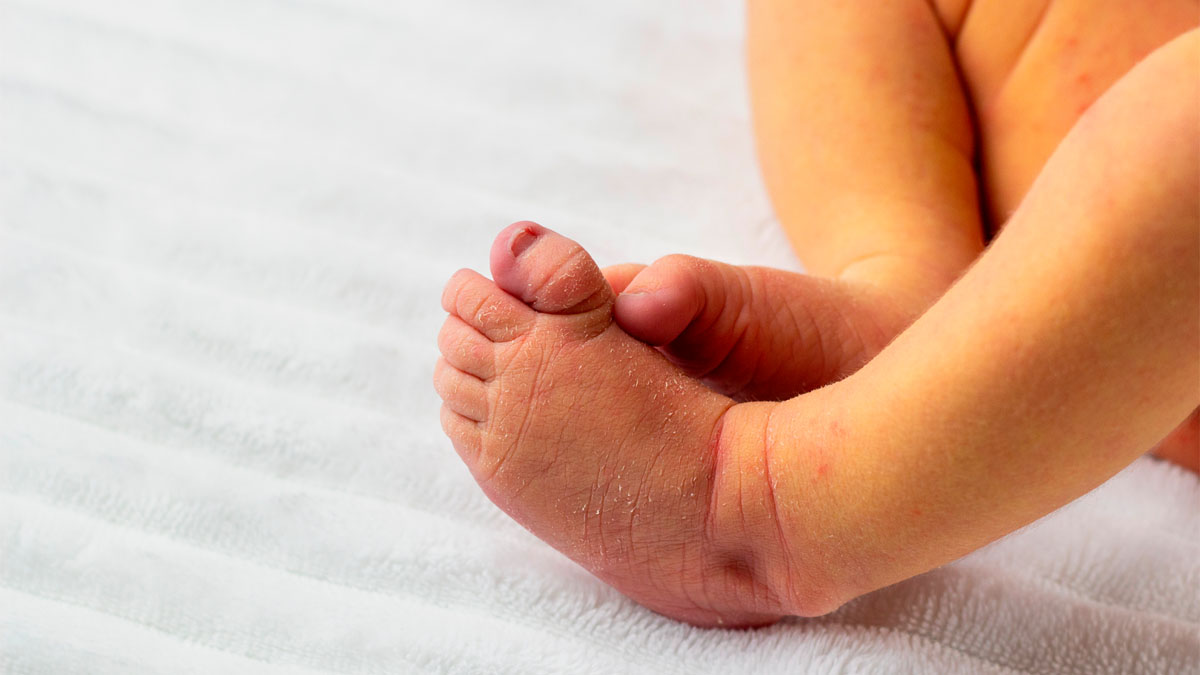
Researchers from the Universitat Politècnica de València, the Francesc de Borja University Hospital in Gandia and the La Ribera University Hospital, through the Fisabio Foundation, have found that sunlight passing through windows in homes is neither a safe nor a recommended alternative for preventing or treating neonatal jaundice, a condition affecting more than half of all newborns.
Neonatal jaundice is usually mild and temporary, but in some cases, it can reach dangerous levels if not treated in time. To avoid complications such as neurological damage, clinical practice relies on early diagnosis and the use of controlled phototherapy devices that emit light within a specific range and at a well-defined intensity.
However, in everyday practice, it remains common to informally recommend "putting the baby in the sun, near the window". Although guidelines do not recommend exposure to sunlight, this practice remains common for preventing or treating jaundice.
In their study, the research team analysed how sunlight behaves as it passes through different types of glass commonly found in homes – up to seven types in total. They concluded that although light entering through windows maintains a high intensity in the blue spectrum – the one used in medical treatments – it does so uncontrolled and is accompanied by potentially harmful radiation.
The researchers measured solar irradiance under different conditions and found that, outdoors, blue light can reach levels up to eight times higher than those used in intensive phototherapy.
"When passing through glass, between 70% and 90% of that light still reaches the interior, which means that a newborn exposed near a window can be exposed to very high levels of radiation that are difficult to control," notes Jesús Alba, a researcher at the Gandia campus of the Universitat Politècnica de València and author of the study.
Furthermore, the study reveals that standard glass does not effectively filter other types of radiation, such as ultraviolet (UVA) and infrared radiation. This can pose an added risk, as these forms of radiation offer no therapeutic benefits and can cause overheating, dehydration or damage to the skin and eyes.
Unlike medical devices, which allow the dose to be adjusted and protect the patient, sun exposure depends on multiple variables, such as time of day, weather, home orientation, and distance from the window.
"This lack of control makes it impossible to guarantee either the efficacy or the safety of this practice. Residential glazing allows very high levels of solar irradiance to pass through, with a broad spectrum that includes UVA and infrared radiation, and blue irradiance several times higher than that used in phototherapy, but without selectivity or dose control. For this reason, exposure to sunlight through a window should not be used as a preventive or therapeutic method to treat neonatal jaundice," emphasises José Miguel Sequí Canet, a paediatrician at the Hospital Francesc de Borja in Gandia
The study concludes by highlighting the importance of following established clinical guidelines, including bilirubin screening and regulated phototherapy when necessary.
The idea for the project and this study arose from Safor Salut, a cooperation programme between key players in the Valencian health innovation system in the La Safor region and its surroundings (UPV, Fisabio and FAES). It has been developed under the 2023 call for proposals of the Polisabio programme – promoted by the UPV and Fisabio – and is part of UniSalut, the collaborative alliance between the Fisabio Foundation and the Valencian universities (UPV, UJI, UMH and, most recently, CEU Cardenal Herrera).
Referencia
Sequí-Canet JM, Alba Fernández J, Del Rey R, Angelats Romero CM, et al. Luz solar a través de los acristalamientos del domicilio y prevención de la ictericia neonatal. Anales de Pediatría. 2026. doi:10.1016/j.anpedi.2026.504206
Outstanding news
 Study a degree at the best technological university in Spain
The Universitat Politècnica de València is ranked number 1 among Spanish technology universities, according to the Shanghai ranking
 Highly Cited Researchers 2025
Avelí Corma, Juan Bisquert and Luis Guanter, the international scientific elite with a Universitat Politècnica de València hallmark
 Historic Milestone in Spanish Higher Education
The UPV inaugurates the Beihang Valencia Polytechnic Institute, the first Spanish university center in China
 Study in English
The UPV offers eight degrees, 16 master's and 650 courses in English for the 2025-26 academic year
 A Latin Grammy... with the UPV hallmark
'Music teaches us to listen and live together,' says Rafael Serrallet, Doctor of Music at the UPV, awarded in Las Vegas as the author of the Best Instrumental Album of 2025
 THE Impact Ranking
The UPV, the Spanish university with the greatest social and economic impact in the world