
The Struggle of the Nobodies
The UPV Development Cooperation Centre celebrates its 25th anniversary with an exhibition featuring images of its fight against poverty and injustice
[ 26/03/2026 ]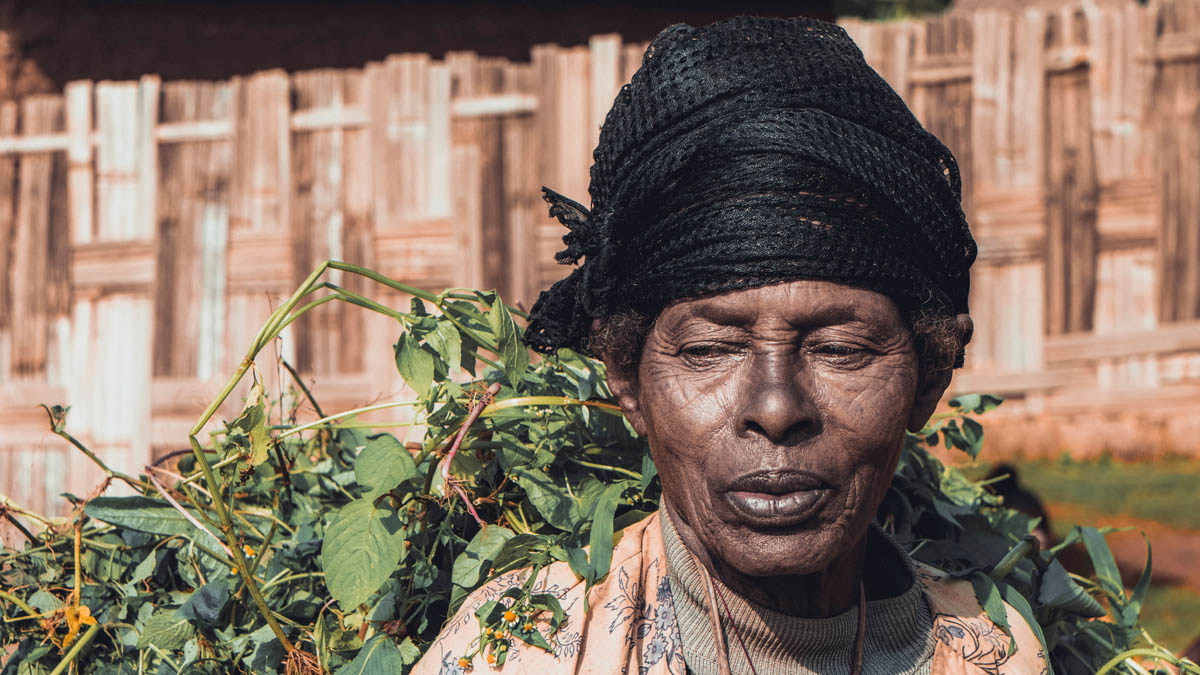
"The Nobodies: the sons of nobody, the owners of nothing.
The Nobodies: the no-ones, the disregarded, chasing after luck, losing their lives, screwed and rescrewed.
Who are not, even though they exist.
Who do not speak languages, but dialects.
Who do not practise religions, but superstitions.
Who do not create art, but handicrafts.
Who do not produce culture, but folklore.
Who are not human beings, but human resources.
Who have no face, but arms.
Who have no name, but a number.
Who do not appear in world history, but in the crime columns of the local press.
The Nobodies, who cost less than the bullet that kills them."
To rebel against poverty and injustice, to combat this grim reality and stand alongside the nobodies whom Galeano brought to light with his magic and raw honesty, the Development Cooperation Centre at the Universitat Politècnica de València (CCD-UPV) was founded 25 years ago—an organisation with a genuine and unwavering commitment to human and sustainable development. Yes, for everyone.
To mark the anniversary, and to highlight the extraordinary work carried out by the cooperants and the CCD team, Room N-1 at the UPV's Vera Campus (Valencia) is hosting the exhibition "Images that Tell a Story: 25 Years of Development Cooperation at the UPV" until 22 April, a selection of 72 photographs awarded prizes in the “Snapshots of Cooperation” competition, held annually by the CCD, showcasing diverse perspectives on international cooperation and social commitment, centred on training programmes, international mobility grants, research programmes applied to human development, or activities to raise awareness and promote volunteering and civic participation.
“Only when the last tree has been cut down…”
Miguel Soriano Juan was studying for a Master’s degree in Hydraulic Engineering and the Environment at the UPV when, in 2015, he travelled to Guatemala for a five-month placement with the Development Cooperation Programme (now Meridies B) and the Association for Training in Integral Development (AFOPADI).
There, in one of the country's poorest regions, the department of Huehuetenango, Miguel provided technical support and conducted a study on the water resources of the town of San Ildefonso Ixtahucan, paving the way for more than fifteen students to follow in his footsteps with the support of AFOPADI.
There, the struggle—which was continued the following year by Javier Vallés, then an architecture student at the UPV—centres on the fight against mining operations that pollute their water and soil, with collusion from political corruption.
"More than a thousand farmers with hardly any training stand in front of the Town Hall in the hope that, one day, things will change. But then the formalities and the empty rhetoric of the Mayor begin, whom everyone knows very well. Who are you trying to fool, Mr. Mayor? Only when the last tree has been cut down, only when the last river has been polluted, only when the last fish has been caught, only then will you realise that money cannot be eaten,” protest AFOPADI.
Pablo and Luisa pave the way for 22 women with disabilities in Ziguinchor (Senegal)
In October 2017, Pablo Valiente, then a student on the Master's in Design Engineering at the UPV, travelled to Senegal with the NGO Dexde (Design for Development) to undertake the practical training for his master's thesis alongside the Kalamisoo group, comprising 22 women with disabilities.
His project, which involved the design and development of a range of products made from palm leaves that Kalamisoo sells in its workshop, in tourist areas of the region and even in Europe with the support of Dexde, continued the following year when Luisa Tóvar, a student on the Bachelor's Degree in Industrial Design and Product Development Engineering, undertook a study of plastic recycling techniques for the development of products intended for sale and to generate income for the local community.
Cristina, Elena, the Wall of Shame, the road to Nampula…
These are just some of the stories hidden behind the photographs that reveal the work of hundreds of aid workers bearing the UPV stamp. Stories of poverty, such as that of Cristina, who gazes with delight at the photographs César took of her in San Pablo (Guatemala), a small, forgotten village where social problems and crime have prevented it from being included on the tourist map (where there isn’t a single guesthouse for dozens of kilometres).
Or that of Elena, the 88-year-old woman who paints her house sky blue every other spring in Dajabón (Dominican Republic), where the CCD has supplied water and stoves to neighbouring communities thanks to the Small Grants Programme of the Global Environment Facility (GEF) and Meridies 2018.
Or the "Wall of Shame", photographed by Pablo Ortín Soriano in Lima (Peru), showing, 'on one side, one of Peru's largest pockets of urban poverty. On the other hand, a district of high-end villas. In between, a wall that separates people and realities, and highlights the injustice and inequality of the world.
These are images that depict uncomfortable, difficult realities, such as "De regreso a casa" (On the Way Home), a photograph of a sunset on the N1 road, en route to Nampula (Mozambique), "where the dust mingles with the heat that still lingers from the day… Children walk home from school, some in silence, others playing. The adults carry what they can: firewood, buckets, weariness… Everyone knows they must get home before dark."
Wounded Childhoods… and 'expert rowers'
Children under attack, defending their right to play – whether on the wreckage of a car in Figuig (Morocco) or flying ‘the kite of freedom’ in the camps of the Sahrawi refugee population in the Wilaya of Bojador – are another of the messages conveyed by these striking photographs.
And they do so by showing, in many cases, children who juggle as best they can their right to a happy childhood with the need to work to support themselves and their families, such as the children climbing palm trees or gathering nets after a day’s fishing in Oussouye (Senegal).
Or the ‘expert rowers’ recommended for crossing Lake Phewa in the Pokhara Valley (Nepal)… a 7-year-old boy and an elderly woman.
Social rights?
Alongside children, women are the most vulnerable group that aid workers strive to support, protect, and empower. The exhibition is a fine example of this. The image of Gloria Deus, queen of the street and a symbol of the drag movement in Guatemala, or the women of San Miguel Pelón (Honduras), drawing up their budget after winning the entrepreneurship prize with their egg and poultry business, speaks for itself, as does the weary gaze of the older adult from Riu Omo, in Ethiopia.
"In the same boat" also shows cooperants and staff returning from work together every day, "clinging to one another, holding on tight because of the bumps in the road. And the many times the truck gets stuck in the mud, we all get out, push, dig," says María José Martínez Piña, a cooperant with Project Outre-mer (CIPO) in Kribi, Cameroon.
Patrice and Zaji’s golden wedding anniversary
But even in the most adverse circumstances, joy can find its place in Kitega (Uganda), where Joel jubilantly celebrates his graduation, or in the central park of Nebaj (Guatemala), where indigenous women leaders perform a Mayan ceremony with fire, flowers, candles, and incense.
These are all moments lived by aid workers who labour tirelessly to help build a better world, and by UPV students and professionals involved in projects which, as explained by María de los Llanos Gómez Torres, director of the CCD, aim to "build fairer, more sustainable and more caring societies".
Whilst all this is happening, in Baasneeré (Burkina Faso), in a country where life expectancy barely reaches 60 years, Patrice and Zaji are celebrating their golden wedding anniversary. They are doing so with a huge party, in a place where Christianity, Islam, and traditional beliefs coexist in peace, and everyone wants to be part of the event.
Perhaps, from there, they are sending us a message that we should all understand.
Outstanding news
 Study a degree at the best technological university in Spain
The Universitat Politècnica de València is ranked number 1 among Spanish technology universities, according to the Shanghai ranking
 Highly Cited Researchers 2025
Avelí Corma, Juan Bisquert and Luis Guanter, the international scientific elite with a Universitat Politècnica de València hallmark
 Historic Milestone in Spanish Higher Education
The UPV inaugurates the Beihang Valencia Polytechnic Institute, the first Spanish university center in China
 Study in English
The UPV offers eight degrees, 16 master's and 650 courses in English for the 2025-26 academic year
 A Latin Grammy... with the UPV hallmark
'Music teaches us to listen and live together,' says Rafael Serrallet, Doctor of Music at the UPV, awarded in Las Vegas as the author of the Best Instrumental Album of 2025
 THE Impact Ranking
The UPV, the Spanish university with the greatest social and economic impact in the world