
SwitchFloc, aquaculture with lower environmental impact
The project is based on Biofloc technology, capable of transforming carbon and nitrogen waste into healthy food for aquaculture.
[ 13/03/2026 ]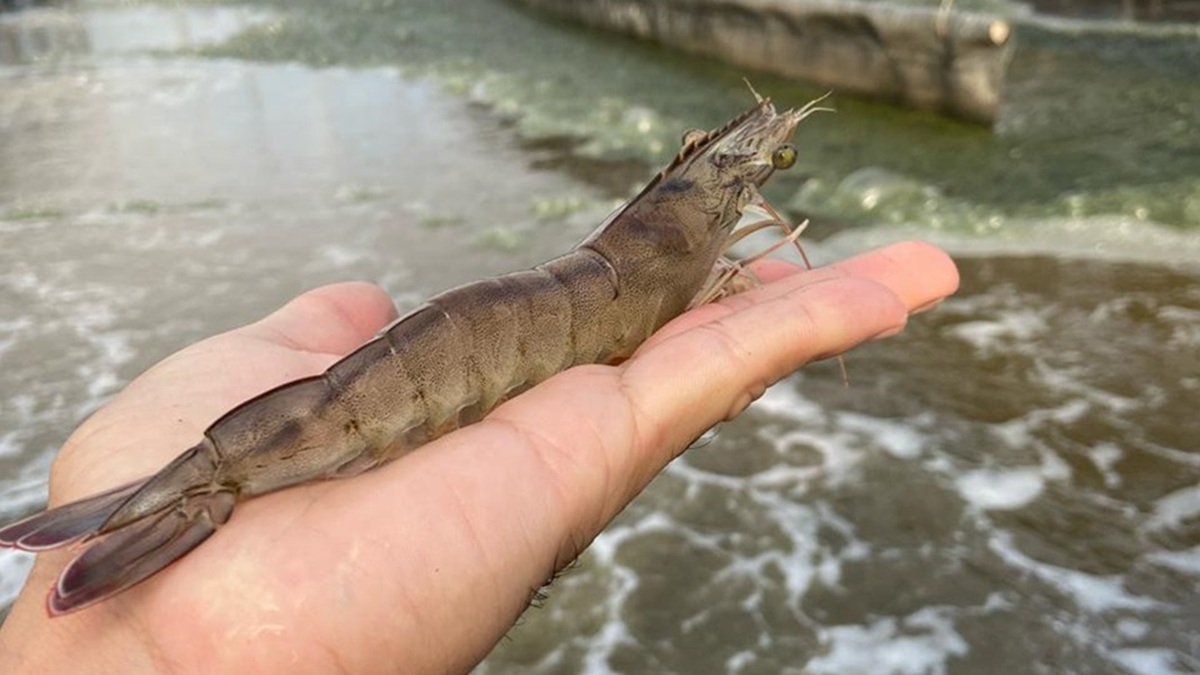
The Universitat Politècnica de València is leading the SwitchFloc consortium, which aims to accelerate the adoption of Biofloc (BFT) in European aquaculture. This technology can transform carbon and nitrogen waste into a healthy feed source for aquaculture, while improving animal welfare and drastically reducing water consumption.
The project aims to contribute to reducing the environmental impact of aquaculture in Europe through an interdisciplinary research programme, advanced training and collaboration with industry.
Running for four years, SwitchFloc will focus on shrimp aquaculture (Penaeus vannamei), the species with the highest production volume worldwide, and will incorporate the Biofloc system in combination with other technologies, such as integrated multitrophic aquaculture (IMTA-FLOC) and hydroponic systems (FlocPonics). It will also examine adaptation to Biofloc technology across different species of interest to European aquaculture, such as sea bream (Sparus aurata).
Reducing the impact of aquaculture
According to David Sánchez Peñaranda, professor and researcher at the Universitat Politècnica de València and coordinator of the SwitchFloc project, 'aquaculture already provides more than half of the world's fish protein and demand is expected to increase'.
Therefore, 'promoting sustainability in aquaculture, both from an environmental and economic perspective, is vitally important for food security and the protection of the ecosystems where it takes place,' he says.
This is the objective of Biofloc technology, which, in addition, 'by not requiring a constant flow of water, makes it possible to obtain fresh, locally sourced seafood practically anywhere,' says Rubén Olivares-Perona, researcher at the UPV and project manager of SwitchFloc.
How Biofloc works
Biofloc is an aquaculture technology that promotes the growth of microbial communities in the water where the animals are reared.
These communities, composed of bacteria, protozoa and microalgae, transform the nitrogenous waste produced by fish or shrimp, such as ammonium and nitrite, into non-toxic organic matter that can be consumed as natural feed by the organisms.
In this way, the system improves water quality, reduces the need for constant water renewal and provides an additional protein source, increasing the sustainability and efficiency of aquaculture production.
It also benefits animal health, according to Rubén Olivares-Perona: 'These microorganisms can colonise their intestinal tract, where they act as probiotic and prebiotic agents and have immunostimulatory effects, as well as improving nutrient assimilation.'
Public-private collaboration
The SwitchFloc project is being developed within the framework of Horizon Europe. This R&D&I investment programme responds to the challenges set by the European Union to achieve a prosperous and sustainable future.
Nine organisations, public research centres and European companies are participating in SwitchFloc as beneficiaries: the Universitat Politècnica de València (Spain); the University of Porto (Portugal); the University of Tromsø - The Arctic University of Norway (Norway); the Alfred-Wegener-Institut Helmholtz-Zentrum fur Polar- und Meeresforschung (Germany); the Università degli Studi di Palermo (Italy); the Università degli Studi di Padova (Italy) and the companies Senior Europa Sociedad Limitada (Spain); VRM SRL (Italy) and Lisaqua (France).
In addition, three associated entities are collaborating: Universidade Federal do Rio Grande-FURG (Brazil), New Food Development S.L. (Spain) and Damm Aquakultur GmbH & Co. KG (Germany).
SwitchFloc is currently seeking and evaluating applications to participate in the project. More information about the calls for applications is available on the website https://switchfloc.eu/.
Outstanding news
 Study a degree at the best technological university in Spain
The Universitat Politècnica de València is ranked number 1 among Spanish technology universities, according to the Shanghai ranking
 Highly Cited Researchers 2025
Avelí Corma, Juan Bisquert and Luis Guanter, the international scientific elite with a Universitat Politècnica de València hallmark
 Historic Milestone in Spanish Higher Education
The UPV inaugurates the Beihang Valencia Polytechnic Institute, the first Spanish university center in China
 Study in English
The UPV offers eight degrees, 16 master's and 650 courses in English for the 2025-26 academic year
 A Latin Grammy... with the UPV hallmark
'Music teaches us to listen and live together,' says Rafael Serrallet, Doctor of Music at the UPV, awarded in Las Vegas as the author of the Best Instrumental Album of 2025
 THE Impact Ranking
The UPV, the Spanish university with the greatest social and economic impact in the world