

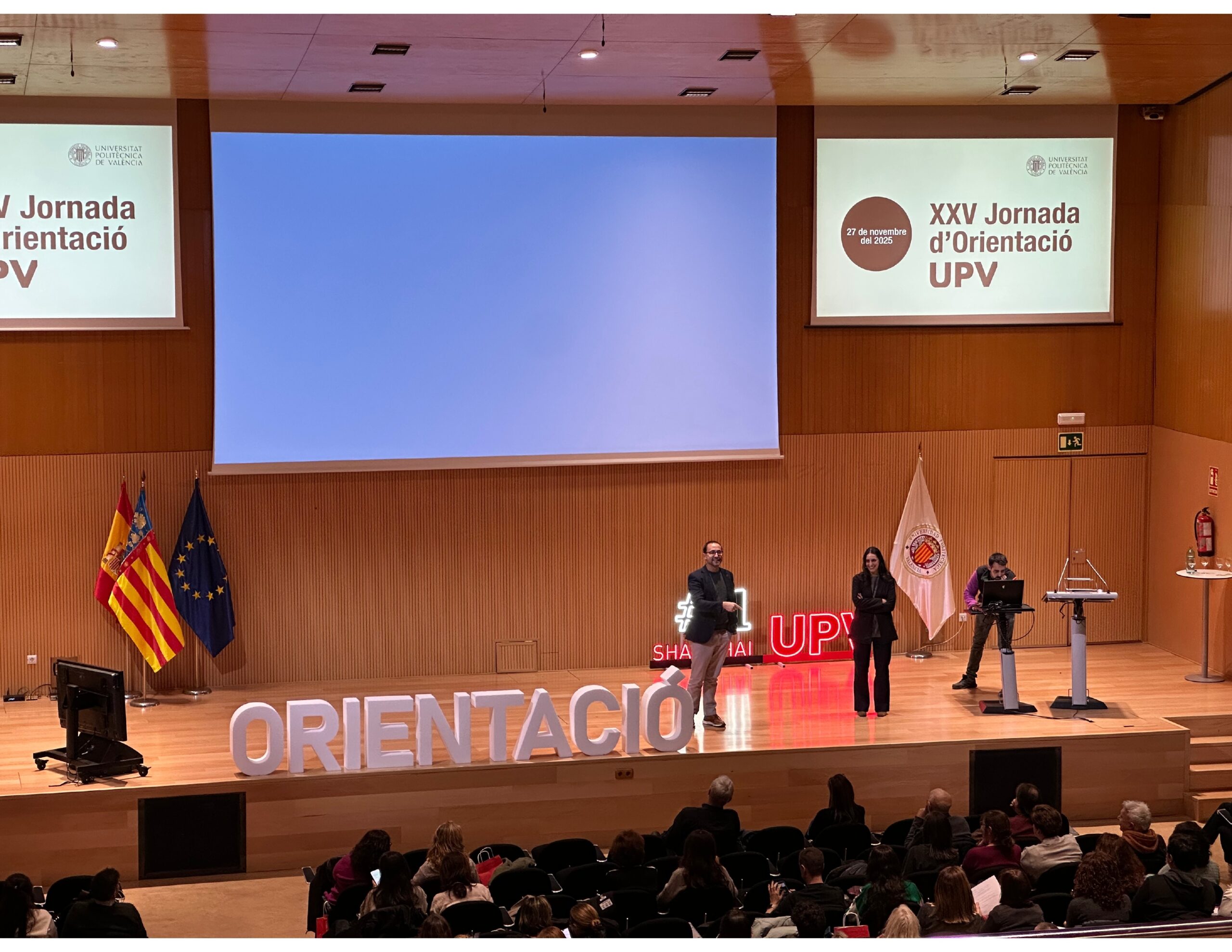
During the Orientation Days, the Vice-Rector for Internationalisation and Communication, José Francisco Monserrat del Río, and Maria Alfonso Molina, researcher in Educational Sciences and Work Package 3 Lead of ENHANCE, delivered the lecture “Emotional-Artificial Intelligence in Education”, an essential reflection on how to integrate artificial intelligence (AI) into secondary education from a responsible and pedagogically sound perspective.
The speakers began the session by highlighting a key fact: three out of four teenagers use AI as a form of companionship.
“Adolescence constitutes a developmental stage characterized by emotional hyperarousal and immaturity of reflective reasoning. This significantly influences young people’s interaction patterns with tools such as AI: They seek understanding and validation, which can lead them to establish illusory trust relationships and artificial emotional relationships.”
maría alfonso molina, researcher in educational sciences and work package 3 lead
This trend poses a major educational challenge: helping students to identify and consciously manage these interactions with digital tools.
A preventive framework for AI educational integration.
During the presentation, a systematic framework was presented for gradually and preventively integrating AI into secondary education. The first step, they emphasised, is to trai metacognition and strengthen executive functions such as attention, working memory, organisation and self-awareness.
“Only after that can students begin to practice with these tools strategically”
José francisco monserrat del río, vice-rector for internationalisation and communication
They also proposed introducing AI-related subjects from 3rd or 4th ESO preventing its use from being seen as something isolated or as a sort of “digital friend”, and instead promoting an understanding of AI as an academic tool to be used with intention and sound judgement.
As an indicator of maturity in the use of AI, they presented the “metacognitive triad” which encourages students to explain what they do with the tool, how they use it, when they apply it, and why they do so. This guidance is especially useful for teachers, counselors, and families.
An itinerary to cultivate thinking routines
The session concluded with the presentation of a teacher training pathway aimed at fostering daily thinking routines, such as connecting knowledge, practising argumentation, and identifying key ideas. The speakers stressed that the goal is not to censor the use of AI during adolescence, but rather to educate students in using it critically, consciously, and in a healthy way.
Alejandra Ramos Argueta
Local Communications Officer