
Frontiers Planet Prize
The researcher from the Universitat Politècnica de València Luis Guanter, Spanish champion of the first edition of the Frontiers Planet Prize
[ 28/04/2023 ]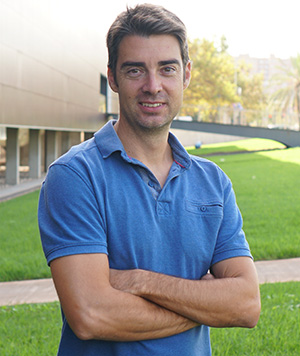
The researcher from the Universitat Politècnica de València Luis Guanter, has been elected Spanish champion of the first edition of the international Frontiers Planet Award. This award, promoted by the Frontiers Research Foundation, recognises the work of scientists from all over the world who contribute to ensuring the future of the planet.
Guanter has been selected by the jury as the best Spanish researcher in this field, thanks to the work developed by the LARS group of the UPV on using satellite images to detect and monitor methane emissions. And it mainly recognises the results of an international study published in Science Advances and led by the UPV team. They highlighted the need to increase control in the oil and gas extraction industries in the United States to reduce their environmental impact on the planet.
The UPV researcher received the award last night at the Frontiers Forum, which is currently being held in Switzerland and in which personalities such as Ban Ki-moon, Al Gore, Jane Goodall and Yuval Noah Harari, among others, are taking part.
The first edition of the awards involved 233 universities from six continents, 13 national academies of science and an independent jury of 100 sustainability experts, chaired by Professor Johan Rockström, Director of the Potsdam Institute for Climate Impact Research (Germany). In total, the jury awarded 20 national prizes, selecting the three international winners, which were Mark New (University of Cape Town), Carlos Peres (University of East Anglia), Baojing Gu (Zhejiang University) and Paul Behrens (Leiden University).
"For me, receiving this award is a great recognition of the work for the mitigation of methane emissions that we have been developing for years at UPV-LARS," says Luis Guanter.
About Luis Guanter
As an environmental physicist, Luis Guanter has led the Land and Atmosphere Remote Sensing (LARS) research group at the Universitat Politècnica de València since 2020, which works on the development of satellite-based methods for monitoring the biosphere.
Three male and two female researchers currently form the LARS group at the UPV. Its most recent work focuses on the use of space-based imaging spectroscopy techniques for the detection and monitoring of methane emissions from ultra-emitters, which are responsible for a substantial fraction of anthropogenic methane emissions.
The group is currently collaborating with international institutions such as the European Space Agency (ESA), NASA and the United Nations Environment Programme (UNEP) on using satellites to reduce methane emissions worldwide.
Outstanding news
 Study a degree at the best technological university in Spain
The Universitat Politècnica de València is ranked number 1 among Spanish technology universities, according to the Shanghai ranking
 Highly Cited Researchers 2025
Avelí Corma, Juan Bisquert and Luis Guanter, the international scientific elite with a Universitat Politècnica de València hallmark
 Historic Milestone in Spanish Higher Education
The UPV inaugurates the Beihang Valencia Polytechnic Institute, the first Spanish university center in China
 Study in English
The UPV offers eight degrees, 16 master's and 650 courses in English for the 2025-26 academic year
 A Latin Grammy... with the UPV hallmark
'Music teaches us to listen and live together,' says Rafael Serrallet, Doctor of Music at the UPV, awarded in Las Vegas as the author of the Best Instrumental Album of 2025
 THE Impact Ranking
The UPV, the Spanish university with the greatest social and economic impact in the world